
By Simon Deng
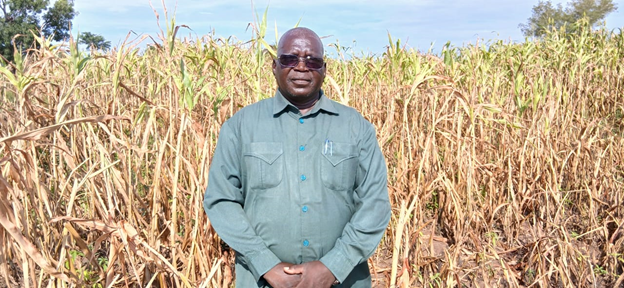
The Commissioner of Aweil Centre County, Peter Natalie Ukech, has issued an urgent appeal for humanitarian assistance to support vulnerable civilians and livestock in Northern Bahr el Ghazal State, as a prolonged dry spell severely threatens agricultural production and livelihoods.
Speaking at a press briefing on Thursday, Ukech warned that the deteriorating conditions could lead to a severe food and water crisis unless immediate support is provided by the national government and humanitarian organizations.
“A serious crisis is looming,” Ukech stated. “We urgently appeal to the national government and aid organizations to provide emergency food assistance, clean water supply, and livelihood support.”
He elaborated on the dire situation, saying, “We have visited Malou boma in Nyalath payam and witnessed drought; it’s a similar situation in other places. People will face a crisis; there is no food production, and drinking water will also be a problem.”
Ukech revealed that the prolonged drought and dry spell have affected not only Aweil Centre but also surrounding areas in Northern Bahr el Ghazal State and neighboring states.
“It is a serious natural disaster that requires intervention from the international community,” he emphasized. “We need assistance from the government and aid organizations.”
Ukech highlighted that the severe drought has caused widespread crop failures, dried up water sources, and threatens a looming hunger crisis.
He noted that local rivers, such as the Royo, can now be crossed on foot instead of by boat, and community drinking water points have dried up, leaving thousands of people and livestock struggling to find safe water and pasture.
“Crops such as sesame, groundnut, and sorghum have failed to grow,” he said. “There will be no food, and there is not enough water. The rivers have dried up; water and pasture are problems, which means all cattle will die.”
Join the conversation
Keep contributions respectful, relevant and suitable for a public newsroom.