
By Waure Eddy
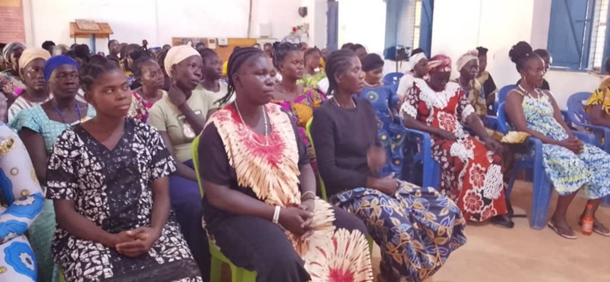
In Western Equatoria State, women across St. Mary, St. Augustine, and St. Josephine Bakitha parishes are transforming their lives through disciplined saving and investment. By contributing 10,000 South Sudanese Pounds weekly to a communal savings box, these women have created a reliable financial safety net for their families. Beyond saving, they are investing in income-generating projects that provide food, pay school fees, and support their households—proving that collective effort and financial discipline can lead to lasting self-reliance.
The women have embraced a culture of disciplined savings, meeting weekly to pool their contributions. This simple act has strengthened financial discipline, built a safety net for families, and created opportunities for small-scale economic growth.
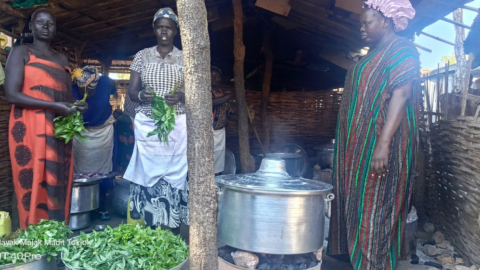
Each parish group manages three hectares of farmland, cultivating crops and engaging in diverse enterprises. They produce bed sheets, operate tailoring machines, process cassava flour, and maintain fish ponds. These ventures not only provide food security but also generate income for education, healthcare, and other family needs.
Sr. Gamboripai Hellen praised the women’s dedication: “All the groups are doing remarkable work in their parishes. They are not only saving money but also investing in projects that sustain their families. Some organizations, including the Diocese, are ready to provide loans to help them expand their activities further.”
Transparency and accountability are central to the groups’ operations. Many have opened bank accounts, ensuring their savings are secure and properly managed.
“Their savings are helping them support their families. This proves that when women unite, they can transform communities,” Sr. Hellen said.
Every Sunday evening, the women gather at the Bishop’s residence to discuss progress, share experiences, address challenges, and plan for the future.
“It is in these meetings that ideas are born, and strategies are shaped. The women are determined to move forward, and their commitment is inspiring,” Sr. Hellen noted.
The women’s stories reflect the impact of these efforts. Anna Peter, a mother of four from St. Mary Parish, shared,”Through our group, I can now pay my children’s school fees on time. The savings and farming projects have helped me buy medicine for my family. We no longer depend entirely on relatives for support.”
Rose Daniel from St. Augustine Parish added,”Our tailoring machines provide a reliable source of income. Saving this money in our group allows us to feed our children and even save for emergencies.”
Teresa John emphasized the value of cassava flour production:”The flour machine has changed our lives. Selling flour in the market helps cover our daily needs.”
Grace Simon of St. Josephine Bakitha Parish highlighted the fish pond project:”We eat fish at home and sell the surplus, improving both our nutrition and income.”
Beatrice Michael noted,”Our savings account is strong, though we do not disclose the exact amount for security reasons. What matters is that we can support our families and plan for the future.”
Despite their achievements, the women face challenges, particularly insecurity, limited access to markets, and scarce resources, which hinder growth.
“If peace were stable, our groups could grow faster because we have hardworking people,” one member said. Nevertheless, the women remain hopeful and grateful to Sr. Hellen for her tireless support:
“She works day and night to ensure our groups grow. We will not let her down,” they said collectively.
The Women and Family Group of CODEP exemplifies how faith-based initiatives can drive social change. By combining savings, farming, and small-scale enterprises with a commitment to peace and justice, the group supports families while strengthening communities.
Bishop Hiiboro Kussala has consistently emphasized that peace and unity are essential for development. The women’s groups embody this vision, showing that grassroots initiatives can have a profound impact.
“These women are the backbone of our Diocese,” Sr. Hellen concluded.
“Their courage, discipline, and unity show that when communities come together, they can overcome challenges and build a brighter future.”
Since its establishment in 1949, the Catholic Organization for Development and Peace (CODEP), the social development arm of the Catholic Diocese, has been a cornerstone of community transformation. Guided by Bishop Barani Eduardo Hiiboro Kussala, CODEP emphasizes peacebuilding, justice, and unity, responding to national and local challenges with resilience and faith.
At the heart of this mission is the Women and Family Group, a vibrant initiative that empowers families across the Diocese. Under the leadership of Sr. Gamboripai Hellen from the International League of Peace, the group has become a model of grassroots development, blending spiritual guidance with practical solutions to everyday struggles.
Join the conversation
Keep contributions respectful, relevant and suitable for a public newsroom.