
By Jenifer James
In Malakal town, where economic hardship and limited job opportunities define everyday life, women selling vegetables have become quiet pillars of survival for their families and communities. Their small market stalls may look modest, but they provide vital income for food, school fees, and medical care.
Rising before dawn to buy and arrange fresh produce, these women turn determination into survival. Though profits are small, their impact is far-reaching—sustaining households, keeping children in school, and strengthening community stability.
In Malakal, vegetable trading is not just a business; it is a lifeline led by resilient women.
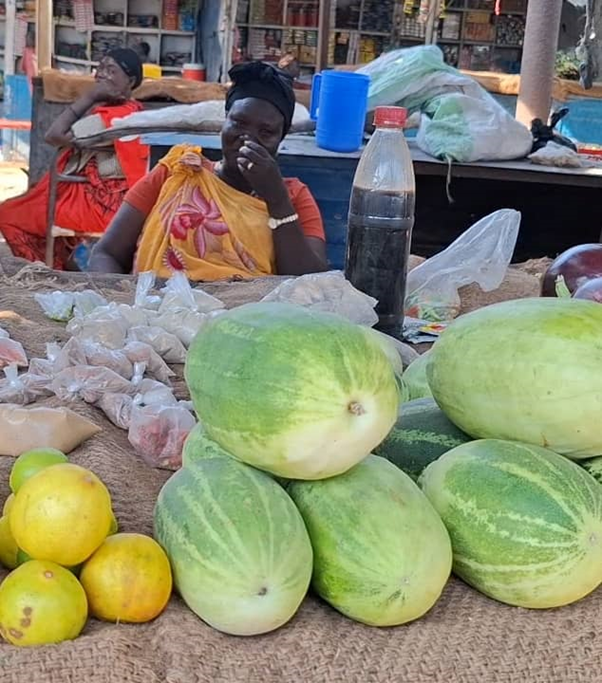
In an exclusive interview with The Dawn newspaper, Mary William, who has been selling vegetables in Malakal Market since 2013, shared her story. Sitting behind a wooden table neatly arranged with tomatoes, cucumbers, lemons, and other fresh produce, she welcomes customers with a calm smile that conceals years of hardship and perseverance. For Mary, selling vegetables is the only source of income that supports her family, covering food, school fees, and medical expenses.
“I started this business because I had no other option, My children needed food, and they needed to go to school. Selling vegetables was the only way I could support them.”
Her vegetable stall is more than a place of trade—it is the backbone of her household. Every day, Mary wakes up early to buy vegetables from suppliers and carefully arranges them on her table, hoping to earn enough to meet her children’s basic needs.
“The money I get helps me feed my children and pay their school fees,” she explained. “Even though the profit is small, it is what keeps us going.”
Mary says the business is unpredictable. Some days she sells well, while on others she struggles to make even a small amount.
“Some days are good and I can make up to 50,000 South Sudanese Pounds,” she said. “Other days I go home with very little. But even when it is hard, I cannot stop. This business keeps my family alive.”
Despite challenges such as rising prices, limited capital, and long hours under the sun, Mary remains determined. Her greatest hope is that through her hard work, her children will have a better future.
“If I can continue with this business,” she said, “my children will continue with their studies and become something better in life.”
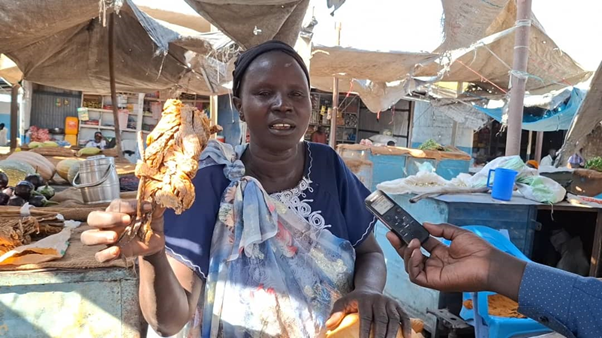
Just a few stalls away, Rebecca Nyanakim runs a different kind of trade. She sells smoked and dried fish, a popular food item in many Malakal households. The business, she says, is demanding, but it allows her to care for her children.
“I sell fish to make my living and take care of my children,” Rebecca said. “What I earn from this business helps me buy food and meet other basic needs at home.”
Rebecca spends long hours sourcing fish from suppliers and waiting for customers, often under the hot sun. Like many small traders, she faces challenges such as fluctuating prices, transportation difficulties, and limited start-up capital.
“When I sell well, I feel proud because I know my children will eat,” she said. “Today, one smoked fish costs 20,000 pounds. I sold five pieces, which is good, and I am happy.”
Although profits are never guaranteed, Rebecca says her sense of responsibility toward her children keeps her going. She believes that even small earnings can make a meaningful difference for families struggling to survive.
The stories of Mary William and Rebecca Nyanakim reflect the reality of many women in Malakal who rely on small-scale businesses to support their households. Through vegetable trading and fish selling, these women are not only earning an income—they are investing in the future of their children and holding their families together against the odds.


Join the conversation
Keep contributions respectful, relevant and suitable for a public newsroom.