
By Waure Eddy
In a place where survival often overshadows opportunity, a quiet but powerful transformation is unfolding in Makpandu Refugee Settlement. What began as a four-month training initiative by Humanity Worldwide has evolved into a lifeline for 150 refugees—turning vulnerability into productivity and restoring dignity to families determined to rebuild their lives.
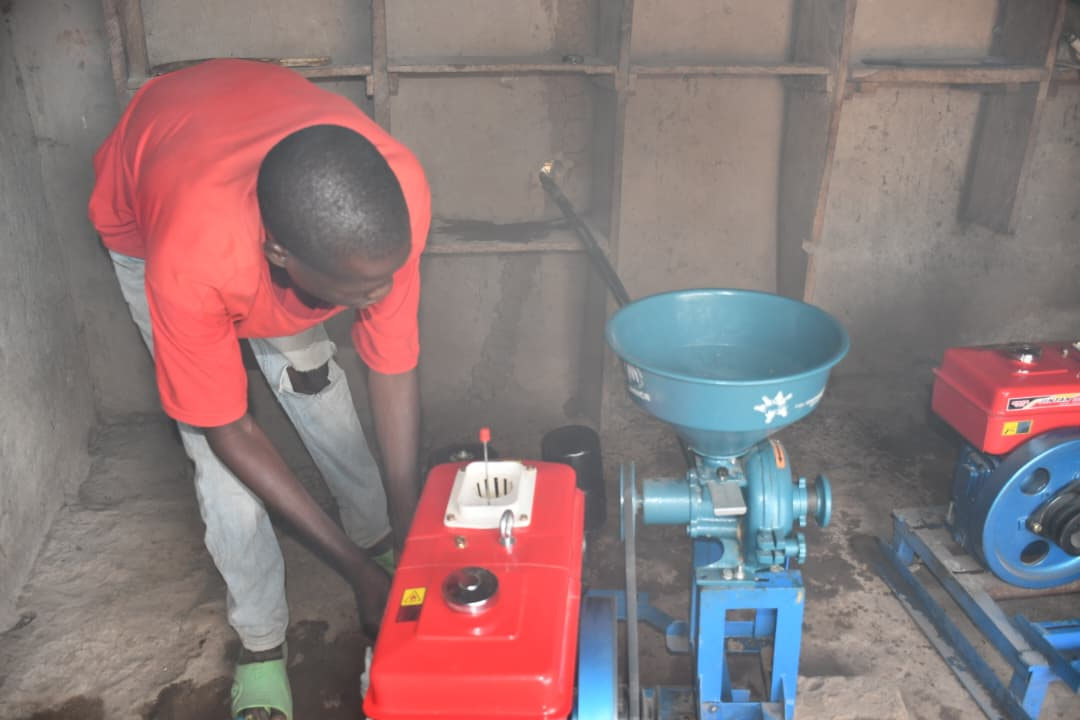
Implemented between September and December 2025, the project combined practical skills training with direct financial support, providing a $10,000 grant shared equally among four cooperatives—$2,500 each. The funds were invested in essential equipment, including milling machines, professional packaging tools, and tricycles for transportation. Today, those machines are more than metal and bolts; they are engines of hope.
Across the settlement, the steady hum of milling machines signals a new beginning. For many families, that sound now means food on the table, school fees paid on time, medical bills covered, and savings set aside for the future.
Four cooperatives that once struggled with limited skills and inadequate tools are now operating with renewed confidence and efficiency. Grain is processed faster, products are packaged professionally, and goods are transported to markets with ease. What was once manual, exhausting labor has become organized, income-generating enterprise.
Emmanuel Gamboripai, chairman of the Gangara Sinai Cooperative Society, describes the rice milling machine as transformative.
“The machine is helping our families and all members. We can process rice efficiently, sell it in the market, and generate income to support our households. It has brought hope and stability to our cooperative,” he said in an interview.
Previously reliant on manual processing, the cooperative now ensures a steady supply of rice to local markets. Increased efficiency has boosted sales and strengthened household incomes, creating a ripple effect of stability throughout the community.
At the Fruit of Hope Cooperative Society, confidence is growing just as quickly as production. Justin John, the cooperative’s secretary, believes the training and tools have opened doors beyond the settlement.
“Thanks to Humanity Worldwide’s support, our cooperative will excel in South Sudan by producing pest and transporting it to neighboring countries. The grant and tools have equipped us to expand beyond local markets,” he said.
Their ambition reflects a broader shift in mindset—from survival to growth, from dependency to participation in national and even cross-border trade.
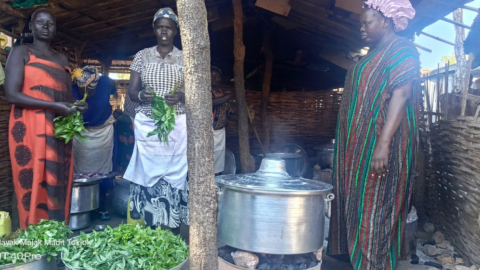
For Suzan Anita of Tomeka Cooperative Society, the impact is felt daily in the vegetable gardens.
“After the training, we are thriving. It helps us day and night, as we earn money daily through vegetable farming. This has improved our families’ lives and given us confidence in our work,” she said.
Vegetable farming has become a reliable source of both food and income, enabling families to meet daily needs while saving for emergencies. With proper training and tools, small-scale agriculture is now uplifting entire households.
Meanwhile, Songoda Cooperative Society has taken on the critical mission of strengthening local food security. Through maize grinding services and training in maize production and processing, the cooperative ensures affordable and nutritious food remains accessible within the settlement.
“We appreciate the organization for selecting us to be part of the training,” said Mrs. Nako Mary, a member of the cooperative. “Our aim is to enhance local food security through processed maize products and other crops. The tools we have received are helping families put food on the table and pay school fees.”
Beyond individual success stories, the project has reinforced organizational structures, improved management skills, and built a culture of accountability within the cooperatives. Members are no longer passive recipients of aid; they are entrepreneurs, producers, and contributors to their community’s economy.
Across all four cooperatives, one message is consistent: gratitude and determination.
“We are going to seek more machines because they are generating income for us,” members affirmed, underscoring their commitment to growth and long-term sustainability.
The Makpandu initiative stands as a testament to the power of targeted, practical support. By combining training, modest financial grants, and essential equipment, Humanity Worldwide has done more than provide temporary relief—it has laid the foundation for lasting transformation.
From rice milling to vegetable farming, pest production to maize processing, these cooperatives have become pillars of resilience within the refugee settlement. Their stories prove that when communities are equipped with both skills and tools, they can rise above hardship, reclaim their dignity, and shape their own future.
In Makpandu, empowerment is no longer an abstract promise. It is visible in full plates, paid school fees, improved healthcare, and cooperative members planning tomorrow with renewed hope.
Join the conversation
Keep contributions respectful, relevant and suitable for a public newsroom.