
By Awan Achiek
An ICT skills development program is equipping young people with essential digital knowledge, preparing them for today’s modern workforce. One of the beneficiaries, Marol James, received training in graphic design and basic computer skills from Remia Technologies South Sudan. The skills and knowledge he gained enabled him to earn income gradually, meet his basic needs, and eventually purchase his own computer.
Today, Marol successfully operates a printing, scanning, and photocopying center in Juba, demonstrating how digital skills training can create sustainable livelihoods and empower youth for the future.
“I attended the training in 2023, where I completed courses in basic computer skills and graphic design. The training was invaluable—I learned Microsoft Word, Excel, and graphic design,” Marol said in an exclusive interview with The Dawn.
He explained, “I opened my computer center in 2025, where I offer printing, photocopying, scanning, and editing services, including logos, banners, posters, and various typing tasks.”
Marol emphasized that the training enabled him to purchase a computer once he earned enough to cover his basic needs.
Another beneficiary, Peter Joseph, who was trained in journalism, said the program helped him realize his dream of becoming a journalist. Joseph began his training at the institute in July 2025, enrolling in a three-month journalism course.
“After enrolling, I realized that the tutors were experienced professionals, and most of the training was practical,” Joseph said.
As a result of the training, Joseph secured an internship at Urban FM 99.5.
“I applied for the internship as I was nearing the end of my training in August 2025. They called me just one week later,” he noted. “I am truly grateful for this opportunity. I have gained valuable experience, especially in news anchoring and reporting.”
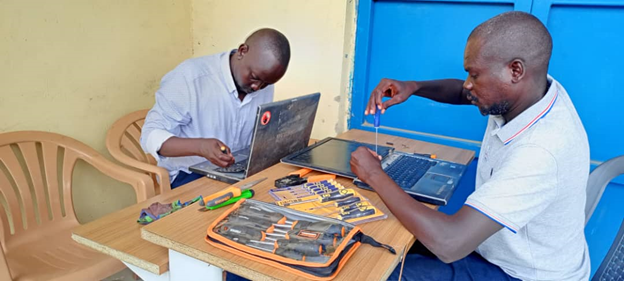
Established in 2019, Remia Technologies South Sudan provides computer repair and maintenance services to individuals, companies, and organizations. In addition to ICT training, the firm also offers journalism and English courses.
The Chief Executive Officer, Ronyo Remmy, said the institution issues more than 50 certificates across various courses every two months.
“We empower the community with digital skills that enable people to earn their own income. We often see youth wasting time playing games or smoking shisha instead of contributing to the economy,” Remmy said.
He added that the institute trains between 250 and 300 students annually, with the aim of transforming young people from job seekers into job creators.
“Empowering youth and adults with digital skills to manage their offices and businesses is one of our main goals,” he said.
The institution offers a wide range of ICT courses, including introductory computer skills, Microsoft Word, Excel, Access, PowerPoint, Publisher, Outlook, Internet basics, photocopying, scanning, and printing.
Remmy also highlighted the organization’s commitment to training students with disabilities, enabling them to participate in the economy and support themselves.
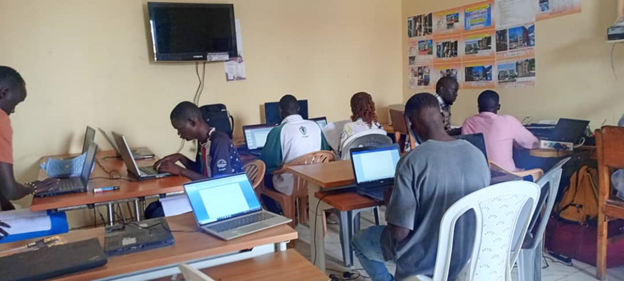
“We train them in computer repair, phone repair, English, and basic computer skills, and they are using these skills effectively,” he said. After completing their training, students with special needs often receive equipment from NGOs to help them start their own businesses.
What began in 2019 with just one computer and a small office has grown into a major source of hope for many young people in South Sudan. According to Remmy, numerous trainees have gone on to establish their own businesses and earn a living.
“We have seen many young people operating around the University of Juba, while others have opened training centers in different parts of the country,” he said. “We have empowered students to become self-reliant and generate their own income. We also educate the younger generation about the benefits and challenges of the Internet.”
Despite these successes, Remmy noted that unreliable and expensive electricity, along with high taxes, remain major challenges to business growth.
“For technology to thrive, we need reliable and affordable electricity. Consistent power supply would significantly enhance technological development,” he said. “We face high daily electricity costs, and Internet access is also expensive.”
He urged the government to take steps to make electricity more affordable and reduce barriers to business growth, emphasizing the need for streamlined licensing and registration processes involving city authorities, schools, and revenue institutions.


Join the conversation
Keep contributions respectful, relevant and suitable for a public newsroom.