
By Awan Achiek
South Sudan’s political parties are set to convene for a long-awaited Inter-Party Dialogue on September 17. This crucial meeting will bring together key political actors to deliberate on the country’s political transition, the implementation of the peace agreement, and preparations for the planned December 2026 general elections.
The dialogue is expected to provide a critical platform for political parties to address outstanding national issues and build consensus on the electoral pathway. It will also discuss measures needed to support a peaceful and credible transition ahead of the polls.
This meeting comes amid growing calls from political parties and other stakeholders for an inclusive political process as the country approaches the end of the transitional period.
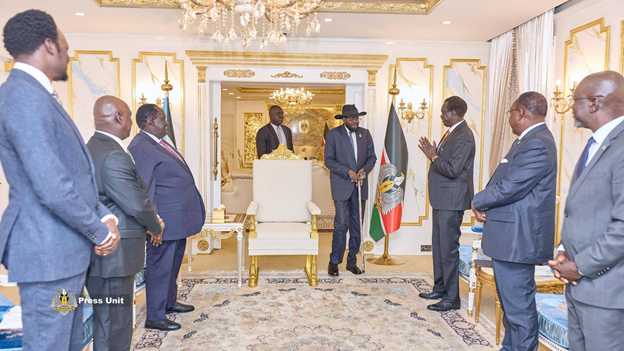
The announcement was made on Wednesday following a meeting between President Salva Kiir Mayardit and leaders of various political parties.
“As South Sudan prepares to convene an Inter-Party Dialogue on September 17, 2026, to discuss the country’s electoral pathway and transitional political settlement ahead of the December 2026 elections,” the Office of the President stated in a Facebook post shared on Wednesday.
The Office of the President further explained that the dialogue is intended to provide a broad-based platform for political parties and other stakeholders to discuss, negotiate, and agree on key electoral issues.
It also aims to identify important post-election issues requiring national consensus to preserve peace, political legitimacy, and the continuity of state-building.
“The dialogue is expected to bring together political parties and groups from across the political spectrum, including those outside the 2018 Revitalized Peace Agreement, to strengthen political understanding and create a conducive environment for peaceful, inclusive, and credible elections.”
Issues expected to be discussed include constituency boundaries, representation, independent candidacy, and whether elections will be conducted at all levels at once or in phases.
Discussions will also cover election financing, campaign funding, and security arrangements for candidates, rallies, polling centers, election materials, and the transmission of results.
“Political parties are also expected to discuss the political space available for campaigning, including freedom of assembly, movement, and speech,”
the statement continued. “The use of digital or manual systems for voter registration, voting, counting, and results transmission; campaign modalities; and access for domestic, regional, continental, and international election observers.”
The dialogue will further consider mechanisms for preventing and resolving electoral disputes, including timely procedures for addressing complaints, as well as a political code of conduct committing participating parties to non-violence, lawful political engagement, and peaceful competition.
The Inter-Party Dialogue is part of ongoing efforts to build political consensus, strengthen confidence among competing political forces, and ensure that outstanding electoral and political questions are addressed through dialogue rather than confrontation.
Join the conversation
Keep contributions respectful, relevant and suitable for a public newsroom.