
By Jenifer James
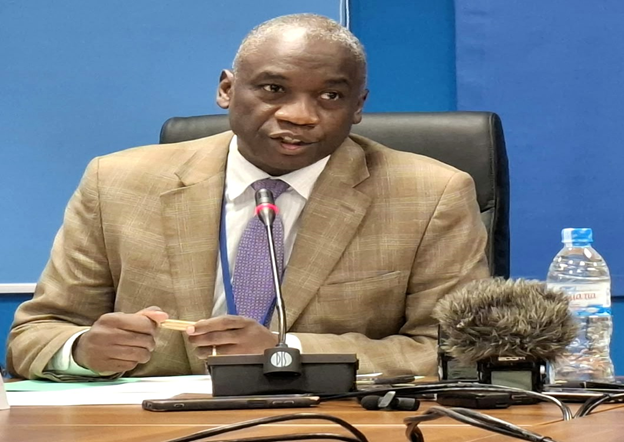
The UN Commission on Human Rights in South Sudan has warned that ongoing violence, political tensions and inadequate preparations could undermine the credibility and inclusiveness of the country’s planned December elections.
Speaking to the media on Thursday, Commissioner Barney Afako said the electoral process remains “grossly underfunded,” while the timetable is highly ambitious, with roughly 100 days remaining before the polls.
“On the elections, it is true that the electoral process is still grossly underfunded. And this is a concern because the timetable is highly ambitious,” Afako said.
He said funding alone would not determine whether the elections are credible, stressing that the security and political environment must allow citizens across the country to participate.
Afako expressed particular concern over areas affected by insecurity and political contestation, warning that violence could prevent electoral officials from reaching communities and restrict citizens from exercising their voting rights.
“Because some of the areas are under contestation, it will be impossible for electoral officials to go there to organize the elections,” he said.
“And it will not be possible for citizens, therefore, to participate in those areas.”
Afako said authorities need a clear strategy for conducting elections in conflict-affected areas to prevent sections of the population from being excluded from the democratic process.
“We accept that elections always have a degree of imperfection. But in a situation where up to half the states of South Sudan are experiencing violence, there needs to be a strategy and some deep thinking about what to do in those circumstances,” he said.
He cautioned political leaders against treating elections as merely a technical exercise, saying decisions on participation and inclusion could either promote stability or contribute to renewed violence.
“Elections are the rights of the people of South Sudan, but they are also political processes,” Afako said.
He urged political actors to maintain dialogue before, during and after polling, warning that disputes could continue beyond election day.
“The work doesn’t stop on the day of polling. There is a lot of political work that is needed after that,” he said.
Afako linked successful elections to broader reforms under the Revitalized Peace Agreement, including security sector reform, transitional justice and stronger institutions.
He also urged voters to demand clear commitments from candidates on security, corruption, humanitarian needs, economic challenges and opportunities for young people.
Afako said the elections should be viewed as an opportunity for political renewal rather than deeper division.
“So the election should be seen as an opportunity of renewal for South Sudan, renewal of commitment to transition and transformation,” he said.
He called on political leaders and stakeholders to use dialogue to build consensus around the electoral process and protect the rights of all South Sudanese.
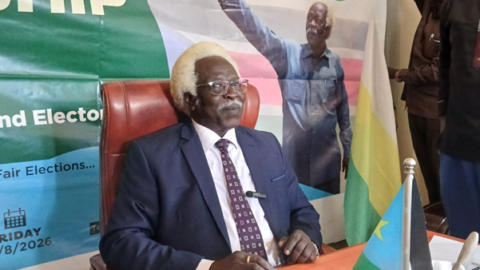
However, United Nations Commission on Human Rights in South Sudan Commissioner Carlos Castresana Fernández has warned that systemic impunity and weaknesses in the country’s justice system continue to undermine accountability for human rights violations.
Carlos said the failure of law enforcement, prosecution, courts and the penitentiary system has created an environment where perpetrators of serious abuses often face little or no accountability.
“Impunity in South Sudan is systemic,” Carlos said, describing it as an “endemic failure” of the country’s security and justice institutions.
He said the country lacks a sufficiently independent and effective rule-of-law system capable of protecting civilians and holding perpetrators accountable.
According to Carlos, the problem extends from police and investigators to prosecutors, judges and prisons, with inadequate institutions and limited deployment of justice personnel outside major towns further restricting access to justice.
“There are no judges deployed in the territories. There are no courts of justice. There are no police stations. There are no prisons or prosecutor offices,” Carlos said.
Carlos said the absence of formal justice mechanisms in many parts of the country has left communities dependent on traditional justice systems, which he described as inadequate for dealing with serious crimes, particularly sexual violence against women.
Carlos warned that the lack of accountability creates an incentive for perpetrators to continue committing abuses, including sexual violence, because they do not expect to face consequences.
“The lack of accountability is an invitation for repetition,” Carlos said.
He called for greater political will and investment in independent courts, investigators, prosecutors and an effective penitentiary system.
Carlos urged South Sudanese authorities to strengthen the justice system and ensure that perpetrators are held responsible, warning that continued impunity risks further weakening public confidence in state institutions and the rule of law.
Join the conversation
Keep contributions respectful, relevant and suitable for a public newsroom.