
By Simon Deng
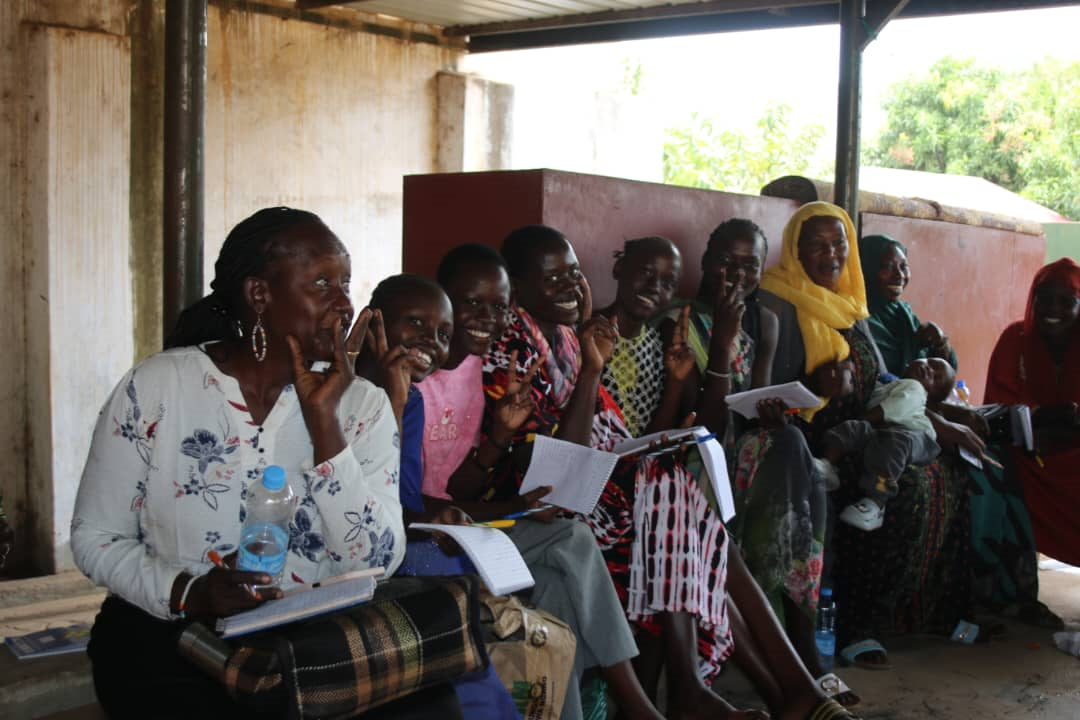
Refugee women in Juba are acquiring vocational and business skills in bread, pastry, and other food production. This initiative aims to help them generate income, support their families, and build more sustainable livelihoods amidst displacement.
Forty-five women from both refugee and host communities participated in a small-business training in Juba. This training is part of a six-month livelihood project implemented by the Community Action for Identity and Community Development (CACED).
Salma Makin Tomba, a mother of four and a refugee from Southern Kordofan in Sudan, spoke during the training on Monday. She arrived in South Sudan due to the war in Sudan and believes these business skills will significantly improve livelihoods.
“I already had experience making bread, pies, and ice cream,” Tomba said. “I hope this training and subsequent support will help me turn those skills into a more profitable livelihood, which will benefit my family. We will do business.”
Tomba emphasized the importance of securing livelihoods while ensuring children remain in school and have future opportunities, especially concerning the challenges faced by young people.
“We want to use these business skills not only to earn an income but also to pass them on to our children,” she explained. “I can teach my children how to make bread and pies.We will do this business and, as a result, help our families.”
George Tadeo Mundir, Coordinator for Community Action for Identity and Community Development (CACED), stated that the initiative is specifically designed to strengthen women’s capacity to engage in small businesses.
“We specifically targeted women, both refugees and the host community,” Mundir said. “The training includes practical skills in preparing food products such as cakes, bread, and pies. These skills can be used to establish or expand small businesses.”
Mundir expressed CACED’s desire for the project to empower women through small businesses, but acknowledged that additional support from other organizations would help expand such initiatives.
“We seek more support from other international organizations to help us implement such activities for our people in South Sudan,” he said.
According to Mundir, the project is supported by the United Nations refugee agency with approximately US$12,000 in funding for the six-month
program. The CACED project is expected to continue for six months, with the remaining beneficiaries scheduled to receive training in the next phase.
For refugee women,the initiative extends beyond a workshop; it provides a foundation for businesses capable of helping them support their families in the longer term.
Madiha Kamil, a 66-year-old mother of six and a refugee, highlighted the personal challenges she faces. Having lived as a refugee in Juba for about 10 years, she struggles to support her six children.
Kamil also emphasized the difficulties faced by refugee families trying to educate their children, including those who have completed secondary education but cannot afford university.
“I have six children. I’m working to pay for their school fees,” Kamil stated. “I earn money through small-scale business activities, including making and selling ice cream and other work, which helps me pay my children’s school fees.”
Kamil disclosed that the situation facing refugees is increasingly difficult, as families struggle to meet basic needs, including paying house rent and keeping children in school.
Kamil appealed to organizations supporting refugees and vulnerable communities to expand livelihood and vocational training programs.
“Some refugees also face difficulties finding work because of their status.Sometimes, you can work, but they see you as a refugee,” she said. “The priority should not be simply receiving assistance, but gaining skills and opportunities that can help women become more economically independent.”
Access to start-up capital, equipment, market access, and continued mentoring are essential to ensuring the program becomes sustainable for these businesses.
Join the conversation
Keep contributions respectful, relevant and suitable for a public newsroom.