
By Simon Deng
Young people in Western Bahr el Ghazal State are increasingly turning to large-scale agriculture as a sustainable pathway to improve livelihoods, strengthen food security, and support their communities.
Through farming, youth are generating steady income that enables them to feed their families, pay school fees for their children, and contribute to the local economy. Beyond income generation, the initiative promotes self-reliance by anchoring livelihoods in community-based agricultural production.
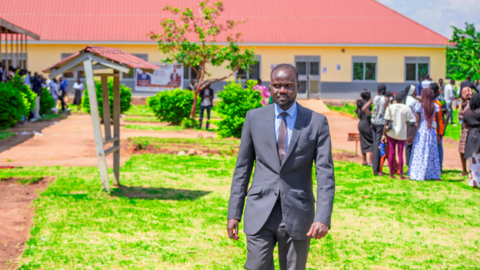
One such farmer is James Pagarau Majok, a 35-year-old agribusiness entrepreneur who has chosen agriculture as a long-term solution for sustaining both his household and his community.
“I have been working in this field for three years since I was trained at the youth center, serving the community of Wau through agricultural activities,” Majok told The Dawn in an interview.
After graduating with a degree in education, specializing in biology and chemistry from the University of Bahr el Ghazal, Majok initially taught in primary and secondary schools. However, a short course in agribusiness changed his trajectory.
“After graduating, I taught in schools, but I also pursued agribusiness training, which has allowed me to sustain my life. It benefits both me and the community,” he explained.
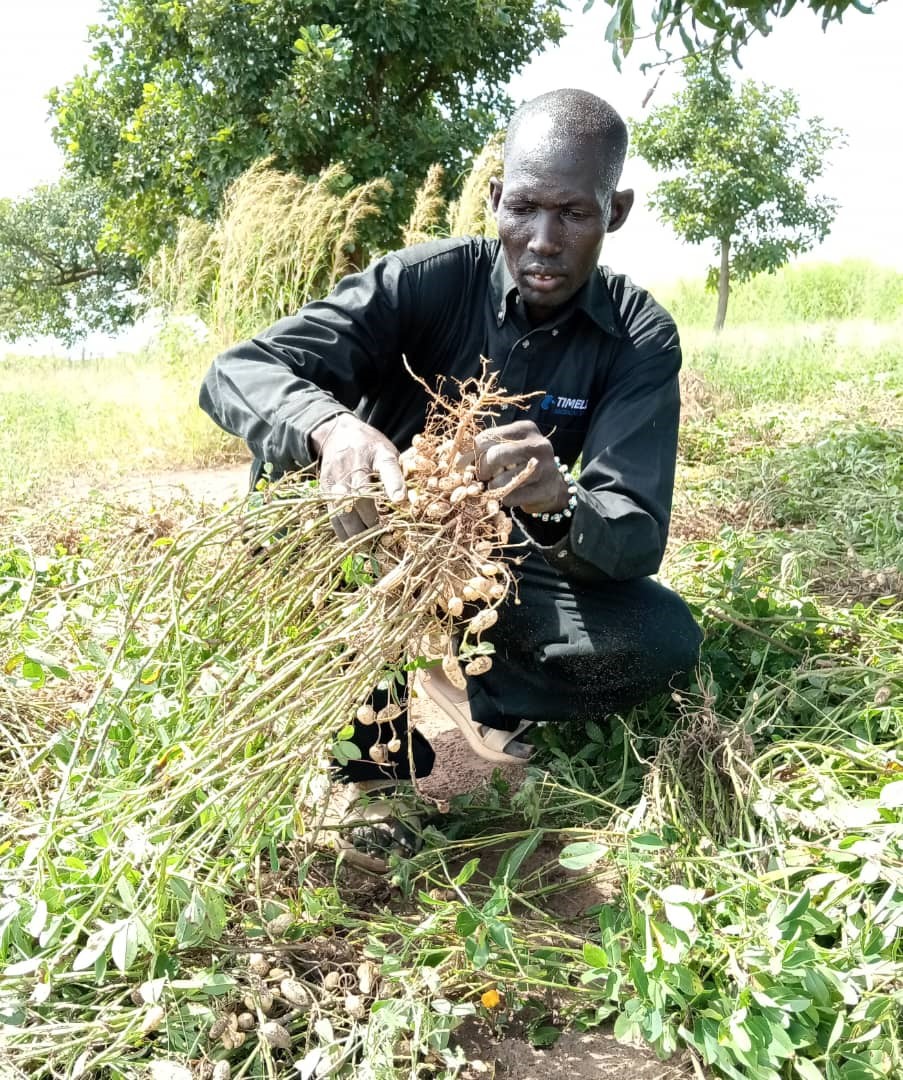
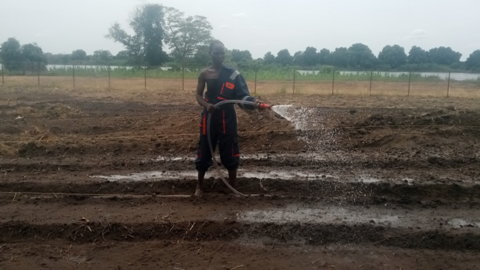
Majok currently cultivates about six feddans of land and practices crop rotation, growing crops that mature within three to six months. After harvesting, he replants to maintain continuous production.
“I am transitioning from small- to large-scale farming. Some crops take three months to mature, others six. Once harvested, I plant again,” he said.
Despite his progress, Majok acknowledged persistent challenges facing food production in South Sudan, including heavy reliance on rain-fed agriculture, limited storage facilities, poor market access, and insecurity.
“My future plans are hindered by insecurity,” he said. “I wanted to move outside the town to find more fertile land suitable for large-scale farming, but safety remains a major concern.”
Food production in South Sudan is largely characterized by subsistence farming, with sorghum as the main staple, supplemented by crops such as groundnuts and sesame, alongside extensive fisheries. However, agribusiness continues to struggle amid conflict, climate shocks, poor infrastructure, and high production costs—factors that contribute to widespread food insecurity.
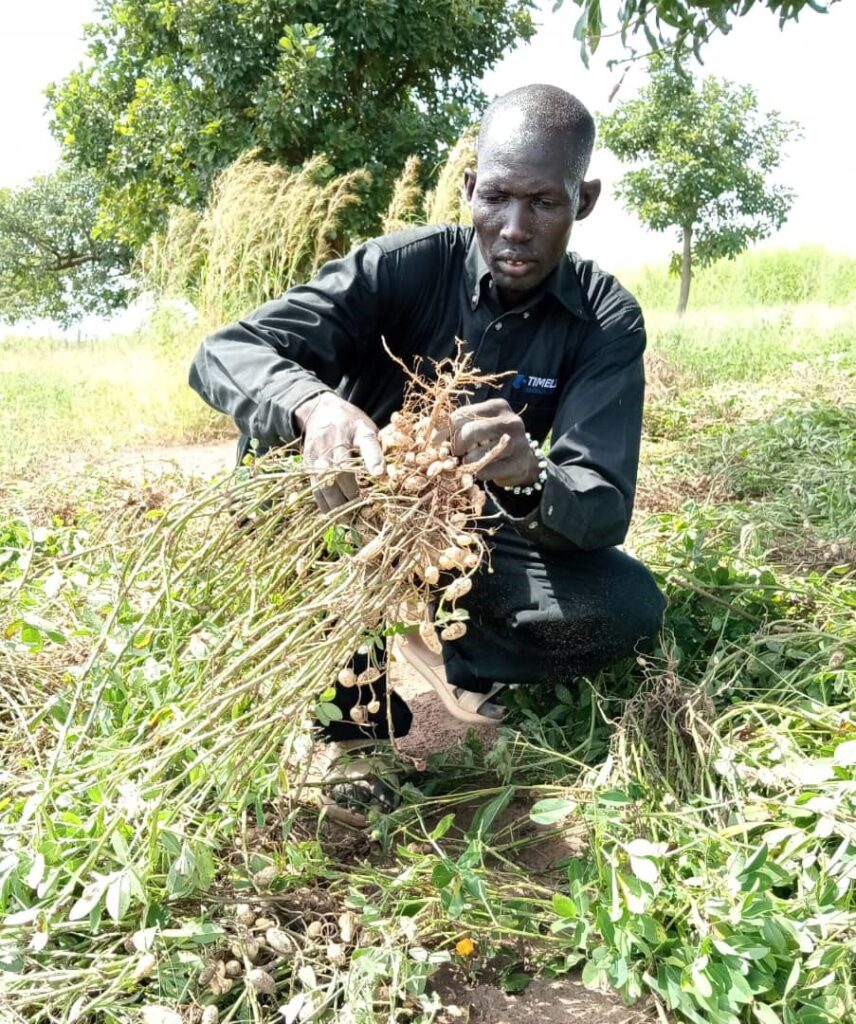
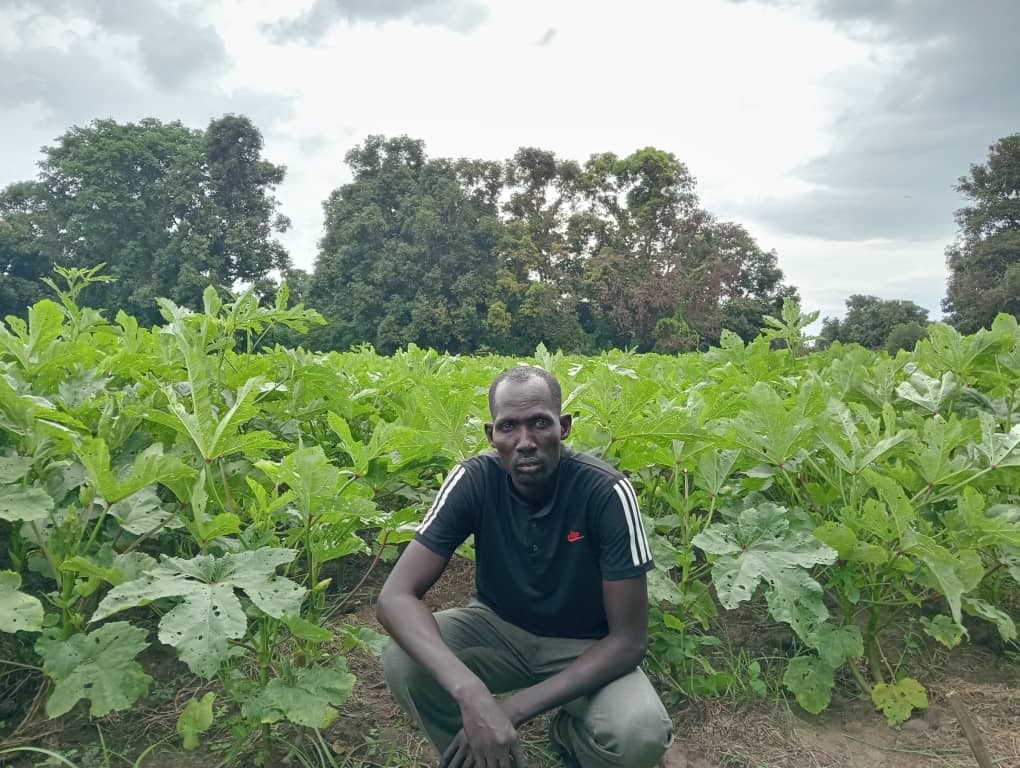
Majok practices mixed farming, cultivating eggplants, okra, and tomatoes in the center of Wau, while growing groundnuts on the town’s outskirts.
“I manage my time carefully. Agriculture comes with many challenges,” he said. “We lack proper tools and equipment. Without them, it is difficult to work efficiently.”
He also highlighted issues related to poor seed quality, transportation constraints, and inadequate shelter for seedlings.
“If the seeds are substandard, all efforts are wasted. Transportation and seedling protection are also major challenges,” he added.
Insecurity, Majok noted, disrupts farming activities, displaces populations, and worsens hunger. Erratic weather patterns—including floods and droughts—have further reduced harvests and increased vulnerability.
“When I farm in town, I grow eggplants, tomatoes, and okra. We remain committed to farming and doing all we can to support ourselves and the community,” he said.
According to Majok, high inflation has driven up food prices, making food unaffordable for many households, while poor road networks increase transportation costs.
“The income I earn reflects my effort. I can feed myself and pay my children’s school fees. I value my work and the income I generate within the community,” he said.
He urged both national and state authorities to invest in agriculture, particularly by providing farmers with tools and equipment needed for large-scale production.
“I appeal to the government to support farmers in scaling up production. Agriculture is the backbone of livelihoods for many people,” he said.
“The major issue is financial support. With capital, farmers can expand production,” he added.
Majok also expressed interest in crop diversification, suggesting the introduction of coffee farming to reduce reliance on imports.
“If we grow coffee locally, we can meet domestic demand and reduce imports from Kenya,” he said.
Another farmer, Andrea Majok, 34, who collaborates closely with James Majok, believes South Sudan’s dependence on food imports can be reversed with stronger investment in domestic production.
“I farm in Jou Market in Wau, where I grow tomatoes for the community,” she said.
South Sudan’s food insecurity is driven by prolonged macroeconomic instability, high inflation, limited food supply, consecutive years of flooding, intercommunal violence, and the ongoing arrival of returnees from conflict-affected Sudan.
Chol Ngangbaai Koch, a 33-year-old farmer growing groundnuts, okra, and vegetables, said targeted investment in agriculture and peacebuilding could significantly improve food security and resilience.
“We need training on cultivation techniques, seed planting, and crop protection,” he said. “We are currently growing tomatoes, onions, and kudura, and we are earning good returns.”
However, he noted that farming remains largely manual, with limited access to water and irrigation infrastructure.
“We lack boreholes and irrigation systems, which becomes a serious problem during the dry season,” he explained.
Food insecurity and malnutrition in South Sudan remain critically high, driven by conflict, displacement, civil insecurity, and climate-related shocks that continue to undermine agricultural production.
“If you grow enough vegetables and they thrive, you can feed your family and support the community as people buy your produce,” Koch said.
He called on the state Ministry of Agriculture to work closely with the national government to provide machinery, fertilizers, and manure to improve yields.
“We need equipment and agricultural inputs to ensure our crops succeed,” he concluded.
Join the conversation
Keep contributions respectful, relevant and suitable for a public newsroom.