
By Waure Eddy
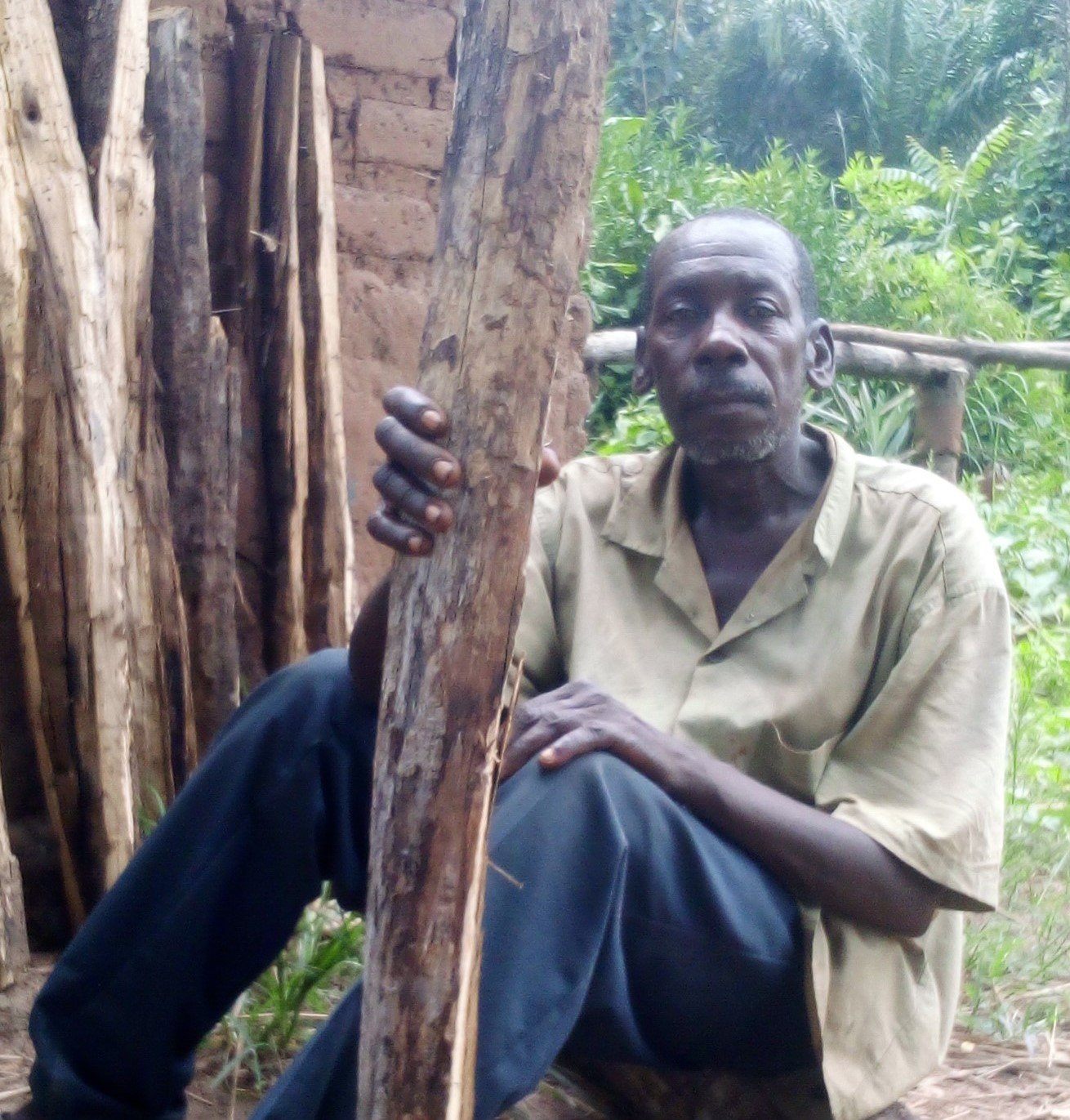
In the dusty heart of Nzara County, where survival often overshadows ambition, one man has proven that determination can spark transformation. For 15 years, 62-year-old Angelo Patrick Gbudu has carried bundles of firewood not just on his back, but on the shoulders of hope. With every log sold, he has fed his family, paid school fees, bought medicine, and carved out a future for his seven children. What began as a humble struggle to make ends meet has grown into a story of resilience—one that now serves as a powerful call for self-reliance and economic independence across South Sudan.
Gbudu, a father of seven, has spent the past 15 years selling firewood to support his family—an endeavour that not only sustains his household but also inspires a broader call for economic independence across South Sudan.
Gbudu’s story is one of grit and grace. Faced with limited opportunities and a struggling national economy, he chose not to wait for government aid or NGO support. Instead, he created his own path in the firewood trade, hauling bundles from the bush to the market each day.
His message to fellow citizens is clear: “Refrain from the culture of poverty and embrace self-employment. Waiting for handouts will not feed your children.”
Despite the physical toll and social stigma often attached to manual labour, Gbudu has found dignity and purpose in his work.
“Selling firewood is not a useless job,” he said. “It’s a source of daily income, a way to maintain family love and responsibility. It brings honour to those who work hard.” Gbudu told the Dan in an exclusive interview in Nzara.
On average, Gbudu earns over 50,000 South Sudanese Pounds (SSP) daily—an amount that rivals or exceeds the salaries of many office workers. With this income, he provides food, clothing, soap, salt, and medical care for his family.
More remarkably, he has managed to educate all seven of his children, with three completing university degrees in business administration, agriculture, and finance, two finishing secondary school, and two currently in primary school.
“My goal has always been to see my children educated,” Gbudu said. “Even through the toughest economic times, I’ve remained committed. Three have graduated, and I will continue working until the other four reach the same level.”
His eldest son, Peter Kumbada Angelo Patrick, now a university graduate, credits his father’s unwavering commitment as the foundation of his success. “My father’s effort was never in vain,” Peter said. “Watching him chop and carry firewood every day gave me the courage to pursue my dreams. His sacrifice is the reason I’m here today.”
Peter’s story is a testament to the transformative power of perseverance. He now hopes to use his education to uplift his siblings and contribute to the community, breaking the cycle of poverty that has gripped many families in Nzara and beyond.
Local leaders have taken notice. Nicola Philemon, a sub-chief in Nzara County, praised Gbudu’s example as a model of integrity and resilience. “Angelo Patrick has survived with his seven children without turning to crime or begging,” Philemon said.
“He chose a path many consider useless, but it has brought him success and respect. This is the kind of lifestyle our youth should emulate.”
Philemon emphasised that while government support is important, individuals must also take initiative. “It’s not solely the government’s responsibility to make life easier,” he said. “People must engage in productive activities. That’s how we build stronger families and communities.”
Gbudu’s message resonates beyond Nzara. He urges citizens across Western Equatoria and South Sudan to reconsider their perceptions of work. “Don’t wait for white-collar jobs,” he said. “What I do is like driving a bus or riding a Boda-Boda. It’s daily income. It’s tax. It’s survival.”
His words challenge a prevailing mindset that equates success with formal employment. In a country where economic instability has left many jobless and dependent on aid, Gbudu’s story is a reminder that dignity and prosperity can be found in the simplest of trades.
As South Sudan continues to navigate post-conflict recovery and economic reform, stories like Gbudu’s offer a grassroots blueprint for resilience. His firewood business may not be glamorous, but it is powerful—a symbol of what can be achieved through hard work, faith, and a refusal to give up.
In Nzara County, where the scent of burning wood fills the air and the echoes of hardship linger, Angelo Patrick Gbudu stands tall—not just as a firewood vendor, but as a father, a provider, and a quiet revolutionary urging his nation to rise—one bundle at a time.
Join the conversation
Keep contributions respectful, relevant and suitable for a public newsroom.