
By Jenifer James
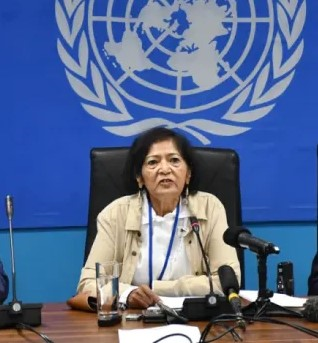
South Sudan faces the risk of a wider war as political tensions deepen, fighting resumes and the country’s fragile peace agreement comes under increasing strain ahead of its planned first elections, Yasmin Sooka, Chair of the UN Commission on Human Rights in South Sudan, has warned.
Speaking at the 81st session of the United Nations General Assembly in New York on Tuesday, Sooka said recent political developments, including changes to the constitutional process and the dissolution of the transitional government, threaten the country’s fragile peace process.
She cited the government’s abandonment of the permanent constitution in July and President Salva Kiir’s dissolution of the transitional government in September, followed by the establishment of a caretaker administration, as developments undermining the transition.
Sooka described the changes as a “constitutional coup through legislative means,” expressing concern that the new administration was “answerable to him alone.” She questioned whether the political environment would allow for an inclusive process and credible elections.
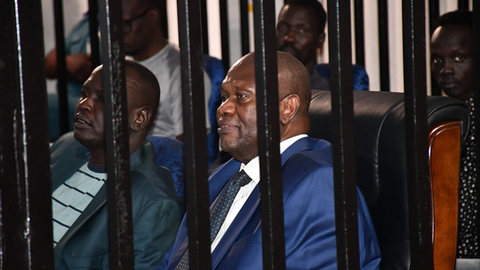
Former First Vice-President Riek Machar remains detained, while opposition figures face exclusion from the political process. Fighting has also resumed, and tens of thousands of fighters remain outside a unified command structure, she said.
“Elections under these conditions risk triggering a wider war,” Sooka warned.
She further cautioned that the concentration of political power ahead of the polls could undermine democratic competition, arguing that “de facto one-party rule” had emerged before a single vote had been cast.
Sooka also warned that the elections could risk “giving democratic cover to the destruction of the peace agreement.”
Beyond the political crisis, she raised concerns about the impact of renewed military operations on civilians and humanitarian access. She cited orders for civilians, peacekeepers and humanitarian agencies to leave Akobo ahead of planned military operations.
The town hosts an estimated 270,000 people, according to the figures cited in her remarks, raising concerns about the potential consequences of military action for civilians and humanitarian assistance.
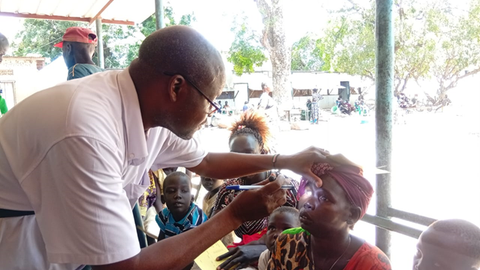
Recalling the 2025 attack on a Médecins Sans Frontières hospital in Old Fangak, which she said killed seven people, Sooka stressed that the effects of violence continue long after an attack ends.
“The harm endures long after the aircraft leave,” she said.
She also highlighted the recruitment of children by armed groups, conflict-related sexual violence against women and girls, and the appointment of commanders accused of serious violations to state forces without proper vetting.
Sooka criticised appointments involving individuals subject to United Nations Security Council sanctions, warning that such decisions could undermine accountability and efforts to protect civilians.
She called for an immediate cessation of hostilities, safeguards to ensure credible elections, continued humanitarian assistance and accountability for serious human rights violations.
She also urged progress towards establishing the African Union Hybrid Court, envisaged under South Sudan’s peace agreement to address serious crimes committed during the conflict.
“South Sudanese want to live without fear and determine their own future,” Sooka said.
Join the conversation
Keep contributions respectful, relevant and suitable for a public newsroom.