
By Awan Achiek
South Sudan has called for stronger cooperation among East African Community (EAC) partner states to sustainably manage shared water resources and address growing environmental and climate-related pressures on the Lake Victoria Basin.
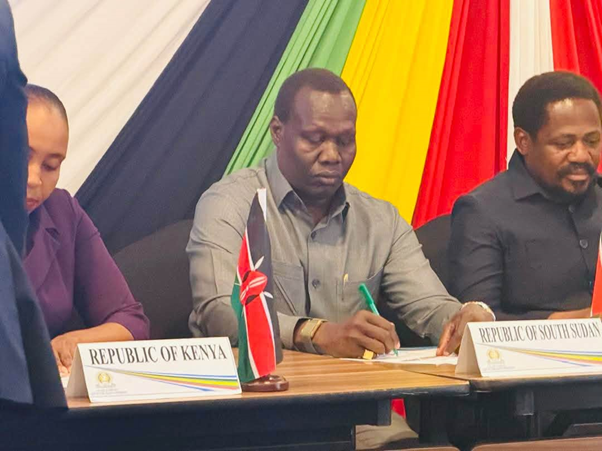
The call was made during the 24th Ordinary Meeting of the Sectoral Council of Ministers on the Lake Victoria Basin (SECOM), held in Kisumu, Kenya, from October 19 to 23, 2026.
Sultan Lam Tungwar Kueigwong, Undersecretary at South Sudan’s Ministry of Water Resources and Irrigation, led a delegation of senior government officials to the meeting.
The meeting brought together regional ministers, senior government officials, and technical experts to discuss the sustainable management of the shared basin.
“This is not ceremonial participation. It is a strategic necessity,” Lam said in a Facebook post on Friday.
He emphasized South Sudan’s hydrological and ecological connection to the Lake Victoria Basin through the White Nile system, stating, “As the uppermost riparian of the White Nile System, South Sudan is hydrologically and ecologically tethered to the Lake Victoria Basin.”
Lam stressed that “the sustainable management of this critical transboundary resource cannot be achieved through fragmented national interventions.”
He warned that changes in the basin’s water balance, sediment movement, and ecological health could directly affect South Sudan’s water security, flooding patterns, and the livelihoods of its people.
The Undersecretary highlighted the meeting’s objectives: “To critically review the compliance matrix on the implementation of previous SECOM directives, to interrogate the performance of ongoing projects and appraise the pipeline portfolio against basin sustainability indicators.”
He advocated for water management approaches based on Integrated Water Resources Management, equitable and reasonable utilization of shared water resources, and the obligation to prevent significant harm to other countries.
Lam also called for strengthening the resource mobilization framework for the Lake Victoria Basin Commission (LVBC) and providing decisive policy guidance and financial and administrative reforms to enhance the operational efficiency and fiduciary resilience of the LVBC Secretariat.
He highlighted mounting pressures on the Lake Victoria Basin, including deteriorating water quality, nutrient pollution, untreated wastewater discharge, unsustainable water abstraction, and prolonged droughts and intense flooding linked to climate change.
“We remain unequivocally committed to a revitalized, technically competent, and financially sustainable LVBC capable of executing its mandate of coordinating research, policy harmonization, and investment in harmonization,”Lam stated.
He added that these challenges threatened the basin’s ecosystem services and required coordinated action by countries sharing its water resources.
The meeting brought together representatives from Kenya, Uganda, Tanzania, Rwanda, Burundi, South Sudan, and the Democratic Republic of Congo under the guidance of the EAC Secretariat and the LVBC.
Join the conversation
Keep contributions respectful, relevant and suitable for a public newsroom.