
By Jenifer James
Through determination and small-scale entrepreneurship, two women in Terekeka have become vital sources of support for their families and inspiring role models in their communities.
Christine Osman, a 33-year-old mother of five, transformed a modest porridge business into a reliable source of income, while Lina Nyoka turned to selling tea after personal loss compelled her to forge a new path.
Today, both women are the primary breadwinners in their households, using their earnings to provide food, pay school fees, and cover medical expenses, demonstrating how grassroots businesses can transform lives and enhance family resilience.
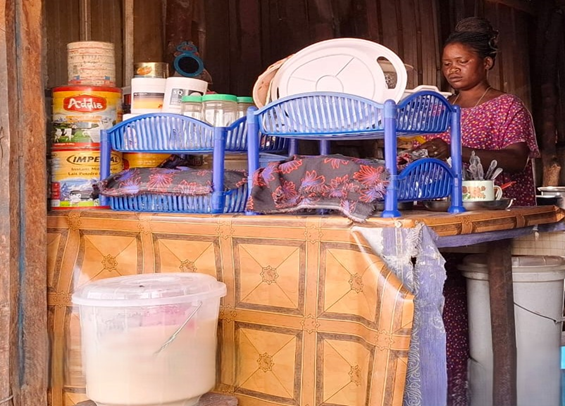
Christine Osman, from Terekeka County in Central Equatoria State, began her porridge business in early 2016. What started with just a cup of sugar, a small bucket of flour, and limited resources has grown into a steady livelihood fueled by years of persistence and hard work. Christine’s entrepreneurial journey not only sustains her family but also serves as inspiration for local women.
“I started this business with very little, but now my work is okay,” she said. Nearly a decade later, her business continues to thrive despite ongoing economic challenges.
On a sunny weekend morning, a reporter from Dawn Newspaper visited Terekeka market to interview women entrepreneurs about their progress. Christine, known throughout the county for her unique porridge, welcomed the reporter into her shop with a warm “DÖ awuyi”—a Mundari phrase meaning “welcome.” Dressed in a blue top and red jalabiya, she served customers while sharing her story.
Each day, Christine rises early to prepare her porridge, using flour, sugar, milk, and pasta. She carefully plans her purchases, often buying large sacks of ingredients to ensure consistency. Priced affordably at SSP 3,000 per plate, her porridge is a community favorite. On average, one bucket of porridge earns her around SSP 200,000, although income varies based on customer turnout.
“When business is good and I sell two buckets, I can make about SSP 400,000,” Christine explained. “During the cultural festival, I was selling three buckets every day.”
As a mother, Christine recognizes how vital this income is for her family’s needs. She uses it to buy food, pay for her children’s school fees, and cover healthcare costs. A portion of her earnings is reinvested into the business, allowing her to restock ingredients, maintain cooking equipment, and improve her small shop.
“I don’t depend solely on income,” she said. “I also serve the people of the county.” For Christine, her business is not just about survival; it’s also about community service, providing affordable meals to those who may otherwise go without.
However, Christine does face challenges. Increased competition from other food vendors sometimes diminishes her daily sales. On slow days, profits barely cover expenses.
“Sometimes there are no customers because many people are doing the same business,” she said.
These challenges have motivated her to consider diversifying her livelihood. If she secures enough capital, she hopes to open a larger clothing shop, believing it would provide more stable income and better opportunities for her children.
“If I get money, I want to open a big shop for clothes,” she said.
Christine is a strong advocate for women’s economic independence, especially for mothers. She encourages women in Terekeka County to take initiative, no matter how small their start.
“My message to the women of Terekeka County is that we should stop depending on our husbands. We need to start businesses. Even the little you earn can help with household needs.”
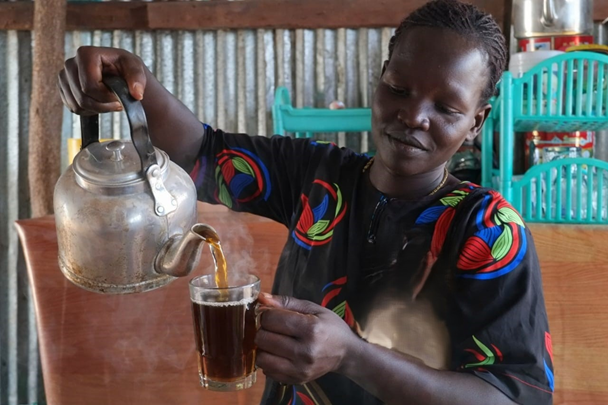
Meanwhile, Lina Nyoka, a tea seller in Terekeka, was propelled into business after losing both of her parents while living in Juba—a turning point that changed her life entirely.
“Life was never the same. I had to come to Terekeka and start a business,” Nyoka said. As the eldest child, she became responsible for supporting her siblings. “The situation forced me to join business because I am the elder and I have to take care of my siblings.”
Nyoka started her tea business three months ago, selling small cups at SSP 1,500 and large cups at SSP 3,000, making her prices accessible to many customers. Through her small venture, she has been able to support her family and send her siblings to school.
She described the early days as challenging, noting that customers initially preferred buying tea from vendors they already knew.
“At first, it wasn’t easy because people here buy tea from whom they know. I made a lot of losses at the beginning,” she said, adding with a laugh, “But now I am making income from the tea.”
Despite the obstacles, Nyoka is optimistic that her business will continue to grow, providing long-term support for her family. She plans to open a tailoring business specializing in Mundari cultural clothing.
Terekeka County Commissioner Emmanuel Loku encouraged the women of Terekeka to actively engage in business activities to alleviate their dependence on men for financial support.
He emphasized that women play a vital role in community development and economic growth. “When women are economically empowered, families and the entire society benefit,” he said.
Emmanuel urged women to seize available opportunities, develop skills, and support one another in business. He added that “self-reliance among women will promote independence, confidence, and long-term development in Terekeka County.”


Join the conversation
Keep contributions respectful, relevant and suitable for a public newsroom.