
By Awan Achiek
As plastic waste continues to pile up across South Sudan’s capital, a young entrepreneur is turning an environmental challenge into a business opportunity by transforming discarded plastic into durable building bricks.
The innovative initiative is not only helping clean up Juba’s streets but also producing affordable construction materials while creating jobs for young people.
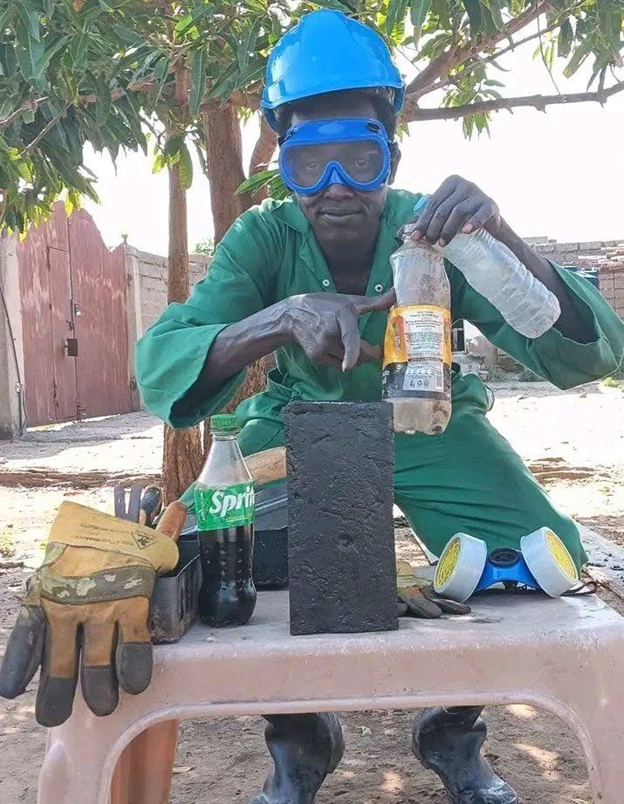
David Chol Kuer Chol founded the Sanitation Solutions Youth Initiative Organization in 2013 after completing his Senior Four education in Uganda. The organization collects discarded plastic bags, bottles, and other plastic waste from markets, neighborhoods, and public spaces before processing them into durable paving and construction bricks using specialized recycling equipment.
His entrepreneurial journey began with the locally popular game “Billy,” which he manufactured and sold in local markets. The experience inspired him to explore innovative ways of recycling plastic waste into useful and durable building materials.
Using discarded plastic mixed with sand, his team manufactures paving bricks that are lighter, stronger, and more affordable than traditional concrete blocks.
Chol, 27, said the initiative was established to reduce the increasing amount of plastic waste littering Juba while creating opportunities for young people.
“The Sanitation Solution Youth Initiative Organization aims to address the growing problem of plastic pollution by recycling plastic waste into eco-friendly construction materials such as bricks,” Chol said.
Chol said the initiative also seeks to foster a greener and more sustainable environment by empowering young people to play an active role in environmental conservation.
He believes that using plastic waste as a raw material reduces the burden on landfills while addressing the growing challenge of plastic pollution.
“This reduces the demand for traditional construction materials like clay and concrete. When we use them, we don’t need too much clay, like buying clay,” he said.
“The lower energy consumption. Production of plastic often requires less energy compared to conventional bricks made from clay or concrete.”
According to Chol, the plastic bricks are stronger and more durable than conventional concrete bricks while offering a cheaper alternative for the construction industry.
“These bricks are 100% strong compared to the normal bricks because they don’t break. Meanwhile, these clay bricks crack, and their durability is not that authentic compared to the plastic ones,” he said.
“The plastic brick can take 100 years compared to the concrete block because once the house that is built with clay bricks is demolished, you demolish everything, and you will need to buy new bricks again to build a new house compared to the plastic bricks.”
When Chol first started the business, he worked alone and manually produced between 150 and 300 bricks a day. With the introduction of machinery, production has increased significantly to between 500 and 1,000 bricks daily.
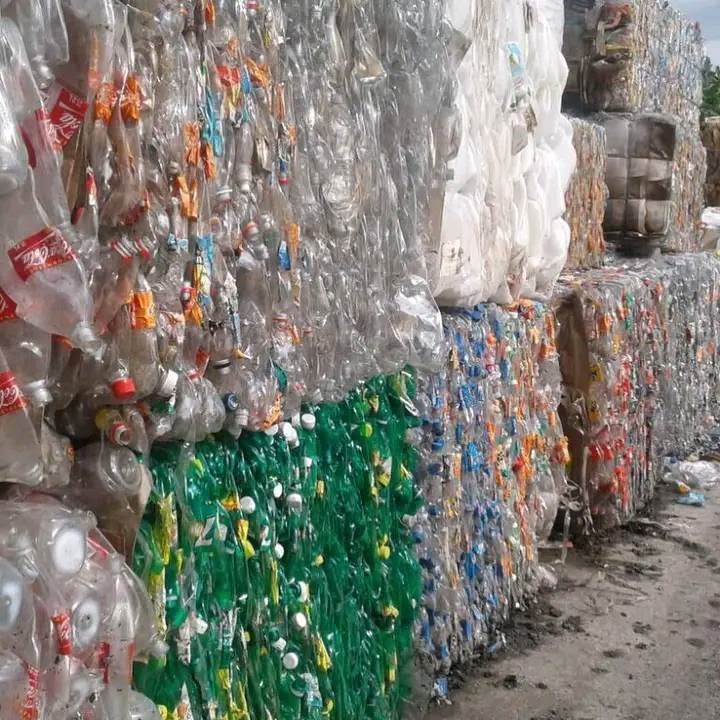
“We can even produce about 500 and 1,000 bricks per day, depending on the amount of waste that we have. Because the more waste we have, the more bricks we produce,” he said.
The initiative has so far recycled more than 10 tonnes of plastic waste and created employment opportunities for 36 waste collectors, women, and young people.
“We have employed 36 young people. We are really 36, but we should be more than 300 as we expand,” he said.
“We don’t have donors or partners. We are the ones paying whatever thing that is costing us to fulfill our recycling goals and missions.”
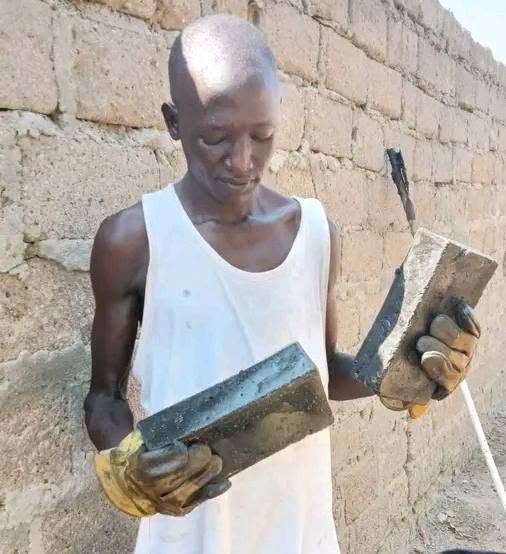
Chol said his organization pioneered technology that transforms plastic waste into environmentally friendly and durable building bricks.
“This innovation has not only provided a sustainable building material and service but also helped reduce the amount of plastic waste in the environment.”
Beyond manufacturing bricks, the organization also conducts environmental awareness campaigns that encourage young people to clean the streets of Juba and promote a cleaner, greener, and healthier city.
“We mobilized local volunteers to remove plastic waste from the streets and public places. This effort has significantly improved the cleanliness and the appeal of areas involved.”
Despite its achievements, the initiative continues to face challenges, particularly in transportation and logistics, which affect its operations and expansion.
“Without proper transportation it becomes so difficult to scale our operation and effectively manage the waste. That’s one of the main challenges.”
Marial Anyar, one of the project’s beneficiaries, said the initiative has provided employment while contributing to environmental conservation.
He explained that workers collect plastic waste, process it through a recycling machine, and transform it into durable plastic bricks.
“It is supporting people who are working because if we collect the waste and then the first thing is to make the environment clean,” Anyar said.
Anyar said the project has enabled him and his colleagues to pay school fees and meet other basic needs.
“So it’s not only helping me, but it’s also helping kids in studying because we do sponsor them to go to school, and then we pay their school fees. So it’s not only supporting me but the whole community.”
Join the conversation
Keep contributions respectful, relevant and suitable for a public newsroom.