
By Awan Achiek
For many women, childbirth is meant to signify the start of new life and hope. However, in hospitals across the country, maternity wards are increasingly becoming places of fear, heartbreak, and death as severe shortages of blood and essential medicines leave doctors powerless during childbirth emergencies.
Health workers report that women suffering from excessive bleeding during delivery are dying because hospitals often lack blood for urgent transfusions. Many expectant mothers arrive already weakened by anaemia and poor nutrition, further increasing their vulnerability during childbirth.
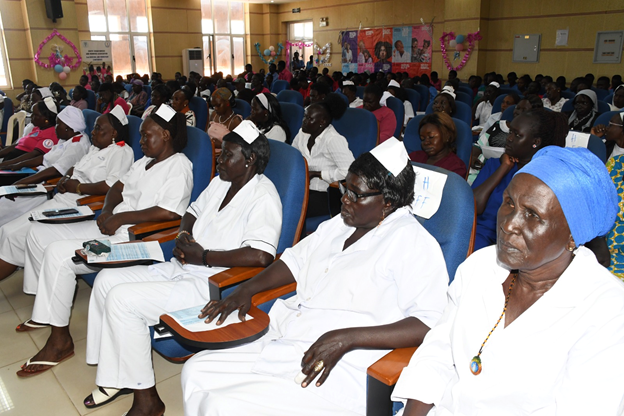
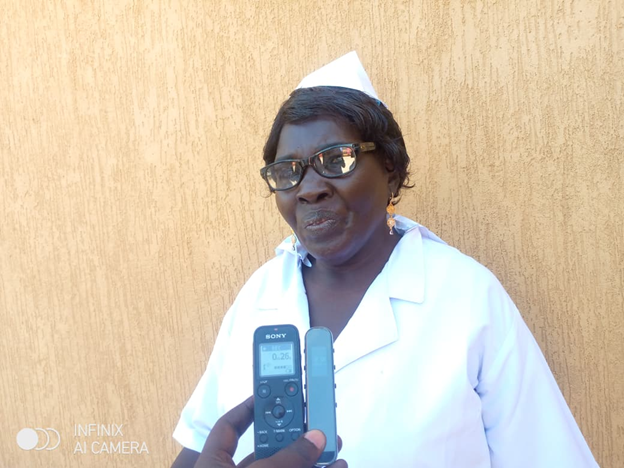
In an exclusive interview with the Dawn Newspaper on Tuesday, Mama Viola Samson Mori, Head Nurse at Al-Sabbah Children’s Hospital, stated that maternity wards are grappling with numerous challenges, including shortages of essential drugs and inadequate blood supplies necessary for safe deliveries.
“We also do not have enough drugs in the hospital. Supplies are very limited, and most patients are forced to buy medicines from private clinics,” Mori explained.
Having worked as a nurse since 1987, Mori noted that the drug shortages in public hospitals have compelled patients to seek medications from private clinics, despite the widespread poverty that affects many families.
“Some patients cannot afford to buy drugs, and at times they believe we are denying them treatment; yet the reality is that the medicines are simply not available in the hospital.”
She also highlighted that poor working conditions and delayed salaries are contributing to the rising rates of maternal and newborn deaths in the country.
“We have been working without salaries and under very difficult conditions, yet we continue saving lives because this is our home and these are our children,” she said.
“It has been nearly three years without salaries, but we continue working because if we stop, the health system will collapse.”
Mori warned that if health workers fail to report to work, many mothers and children will lose their lives.
“Sometimes, when we do not have money for transport, we struggle to find any possible means just to get to the hospital.”
She appealed to humanitarian organisations and the government to provide hospitals with sufficient medicines so they can continue saving lives.
Maternal deaths remain a significant public health challenge in South Sudan, where women and newborns continue to face life-threatening risks during pregnancy and childbirth.
Weak health systems, shortages of skilled health workers, and limited access to essential medicines and emergency care are major contributors to maternal deaths.
Anna Dudu Festus, a nurse and midwife at Juba Teaching Hospital, stated that women who experience excessive bleeding during childbirth often die due to the lack of blood in hospitals.
“Pregnant mothers come to the hospital for delivery already suffering from low blood levels,” Dudu said.
“A mother may successfully give birth but then require an urgent blood transfusion; however, there is often no blood available.”
Dudu, a 66-year-old mother, has worked as a nurse for 15 years and as a midwife for 29 years at Juba Teaching Hospital, having started in 1997.
“People are dying because of this shortage. You can see a mother who has just delivered bleeding heavily, but there is no blood available for transfusion,” she lamented.
She urged the public to donate blood to save the lives of mothers and young girls.
“Women are losing blood every day during childbirth, and we urgently need more blood donors to save the lives of mothers and young girls.”
The country has one of the highest maternal mortality ratios in the world, estimated at between approximately 692 and over 1,200 deaths per 100,000 live births, according to estimates from WFP, UNFPA, and the World Bank.
This means hundreds of women die for every 100,000 births, often from preventable causes such as severe bleeding, infections, high blood pressure, and complications during delivery.
The under-five mortality rate is also critically high, at around 96 deaths per 1,000 live births.
Juma Lino Mogga, a nurse at Juba Teaching Hospital, called for urgent investment in maternal health services, including better-equipped hospitals, improved blood donation systems, and more trained midwives and doctors to reduce preventable deaths.
“We are on the front line, facing every challenge and every illness because we understand diseases,” Lino said.
He noted the lack of equipment and tools in health facilities that could make their work easier and more effective.
“We need support from the government to address the needs of nurses and midwives,” he added.
He also emphasised the importance of continuous professional development, stating that health workers are seeking opportunities to upgrade their knowledge and qualifications.
“Nursing is a profession with growth. We should not stop here; we can progress to the level of doctors through further training and education.”
Repent Khamis George, president of the South Sudan Nurses and Midwives Association (SSNAMA), highlighted the ongoing struggles of health facilities with high maternal and newborn deaths, shortages of healthcare workers, limited health services, and poorly equipped facilities.
He stressed the need to strengthen the capacity of health workers, noting that a well-trained and adequately supported midwife translates into safer deliveries, healthier mothers, stronger families, and more resilient communities.
Tong Manguat, Acting Director General of Juba Teaching Hospital, assured staff of efforts to improve their working conditions.
“We will make sure that this incentive, within time—three months or more than six months—shall see improvement,” said Manguat.
Malaria, tuberculosis, and HIV/AIDS remain the leading causes of illness and death in South Sudan.
Malaria alone accounts for about 45% of all outpatient visits, while tuberculosis affects an estimated 15,000 people each year.

Join the conversation
Keep contributions respectful, relevant and suitable for a public newsroom.