
By Simon Deng
Teachers in Central Equatoria State have urged the caretaker government to ensure timely salary payments and improve remuneration, warning that prolonged delays and poor working conditions risk forcing more educators out of classrooms.
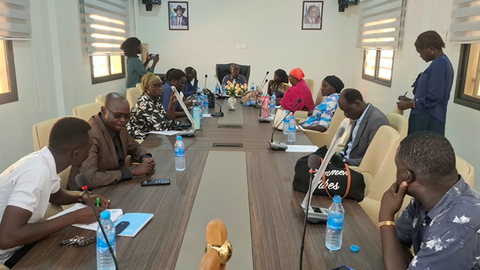
The appeal was made during the commemoration of World Teachers’ Day in Juba on Thursday, where teachers called on authorities to prioritize education and address the financial challenges facing educators across the state.
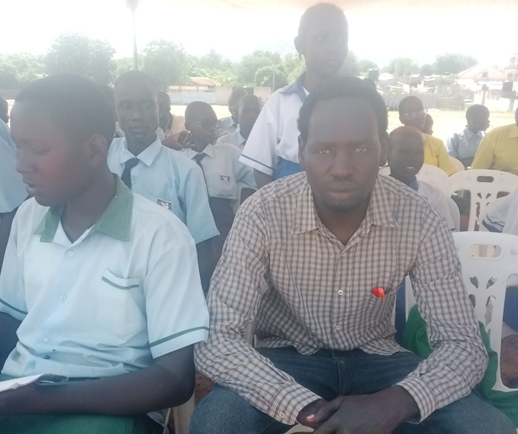
Gala Gabriel Claudio, who teaches science at African Inland Church (AIC) Nursery and Primary School and Physics and Mathematics at Nile Model Secondary School, said some teachers had gone as long as seven months without receiving their salaries.
“Education is life and the future for the country. The government needs to promote education by paying teachers and managing schools. It takes seven months for teachers to get paid; the government needs to increase and pay teachers on time,” Claudio said.
He described the difficult circumstances facing teachers, saying many rely on support from parents to continue delivering lessons while waiting for their salaries.
“The situation of teachers in South Sudan is actually worse. If not for parents, we could not manage to teach. The government takes months to pay salaries for teachers, which is why many teachers leave school,” he added.
The Central Equatoria State Teachers Union, in collaboration with the state Ministry of General Education and Instruction, commemorated World Teachers’ Day under the theme, “Standing with Teachers as the Pillars of Development in the Nation.”
Emmanuel Lado Stephen, chairperson of the Central Equatoria State Teachers Union, called for greater recognition of teachers’ contributions to national development, citing low and irregular salaries, challenging classroom conditions, and a lack of health insurance for teachers and their families.
“Teachers receive very low but irregular salary payments, they work under challenging classroom environments, and the teachers’ union lacks health insurance for teachers and their families,” Stephen said.
He stressed that teachers play a central role in shaping the country’s future but warned that the education sector continues to face a shortage of qualified educators.
“Our nation’s future begins in our classrooms, starting from Juba County to every community across the state. Our teachers are champions of peace, resilience, and nation-building, but we lack qualified teachers,” he said.
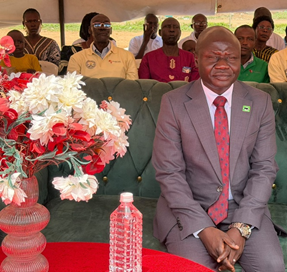
Lupai Satimon Andrew, the caretaker minister of General Education and Instruction in Central Equatoria State, acknowledged efforts to improve teachers’ conditions and emphasized the importance of investing in education to support national development.
“If we desire a country with skills, professions, responsible citizens, strong institutions, and sustainable development, we must begin by investing in the people who educate our children. We are standing with teachers,” Andrew said.
He described teachers as central to developing knowledge, nurturing young people, promoting peace, and strengthening national values.
“Teachers are not simply people who deliver lessons in classrooms; they are builders of knowledge, mentors of young people, promoters of peace, custodians of our values, and the foundation upon which we can build a more peaceful and prosperous nation,” he added.
Muortada James, an English and science teacher at Atlabara Primary School, urged the government and its partners to provide greater financial and material support to teachers and improve teaching and learning environments.
“The situation of teachers is not quite good; it is resilience for teachers to continue teaching. Government and partners need to support teachers financially and materially so that they continue with the teaching profession,” James said.
Teachers said timely salary payments, improved remuneration, better working conditions, and stronger institutional support were necessary to retain educators and strengthen the education system in Central Equatoria State.
Join the conversation
Keep contributions respectful, relevant and suitable for a public newsroom.