
By Jenifer James
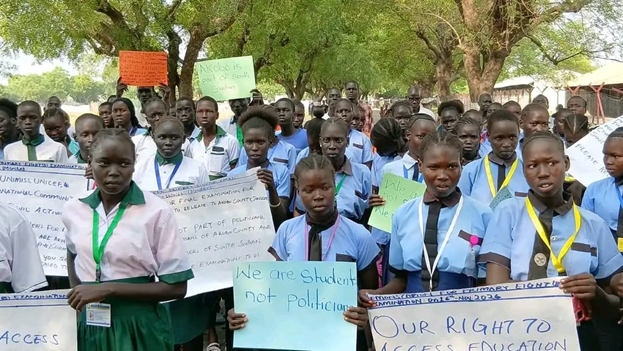
At least 534 primary school candidates in Jonglei and Unity states will miss South Sudan’s 2026 Certificate of Primary Education (CPE) National Examinations due to insecurity and restricted access to examination centres, as the nationwide examinations began on Monday, with 87,358 candidates sitting for the first paper.
The affected areas include Akobo East and Akobo West in Jonglei State, as well as Nyal and Ganyliel areas in Unity State.
Speaking during a press briefing on Monday, Caretaker Minister of General Education and Instruction Kuyok Abol Kuyok said efforts had been made to relocate the affected candidates to safer examination centres. However, he alleged that local authorities had denied examination personnel access to the centres.
“From the outset, it is important to clarify that all relevant stakeholders worked together to facilitate the relocation of the affected candidates to safer locations for their examinations,” Kuyok said.
“However, local authorities refused to grant examination personnel, monitors, and supervisors access to the examination centres.”
Kuyok explained that the decision not to administer examinations in the affected areas was primarily intended to protect the lives of national examination monitors and safeguard the integrity of the examination process.
He expressed regret over the situation, acknowledging its impact on the affected candidates, their parents, guardians, teachers and communities.
He said the council was assessing the security situation and consulting relevant stakeholders to explore the possibility of arranging alternative examinations if conditions improved.
Kuyok noted that relocating candidates to safer examination centres was an established practice in areas affected by insecurity.
“For the last five years, we have relocated candidates from Rumbek North to Rumbek Centre, about 75 miles away. In Juba, we have also brought children from Wonduruba to sit their examinations here,” he said.
He urged candidates in the affected areas to consider relocating to states or counties where examinations were proceeding if security conditions remained unfavourable.
“Our hope was that local authorities would allow monitors to accompany the examination papers, as we have done in previous years. Unfortunately, they declined,” he said.
The minister rejected proposals to hand over examination papers to local authorities for administration, arguing that such an arrangement would compromise the credibility of the national examinations.
“If you read some of their communications, they suggest we deliver the examinations to them for administration. That would not constitute a legitimate examination,” Kuyok emphasised.
He appealed for calm among parents, guardians, school authorities and community leaders as the ministry continued to assess the situation.
He reaffirmed the government’s commitment to ensuring fair and credible national examinations while prioritising the safety of candidates, examination personnel and examination materials.
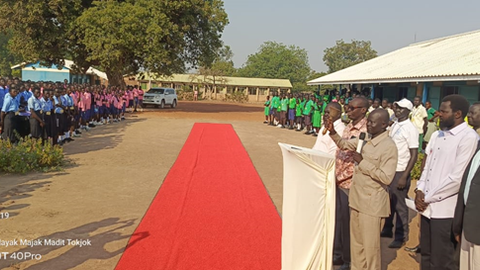
Meanwhile, Presidential Envoy for Special Programmes Adut Salva Kiir officially marked the commencement of the examinations by ringing a bell, describing the exercise as a significant milestone for thousands of pupils transitioning from primary to secondary education.
Adut announced that 87,892 candidates from 2,007 schools were expected to sit the 2026 examinations at 518 centres across South Sudan and Egypt.
“Every candidate taking this examination today represents hope for their family, community, and our nation,” she said.
She reaffirmed the government’s commitment to supporting the education sector through improved learning environments, teacher development and efforts to strengthen the credibility of national examinations.
Adut urged examination officials, school administrators, supervisors, invigilators and security personnel to uphold professionalism, integrity, impartiality and accountability throughout the exercise.
“The credibility of our national examinations is a shared responsibility. I call upon the National Examinations Council, educational authorities at all levels, school administrators, supervisors, invigilators, examination monitors, and security personnel to perform their duties with the highest standards of professionalism and integrity,” she said.
She also cautioned candidates against examination malpractice, urging them to rely on their preparation and demonstrate their knowledge honestly.
“Our children deserve a fair opportunity to show their abilities without undue advantage or interference,” she added, stressing the government’s expectation that all stakeholders uphold the standards and reputation of the national examinations.
Join the conversation
Keep contributions respectful, relevant and suitable for a public newsroom.