
By Awan Achiek
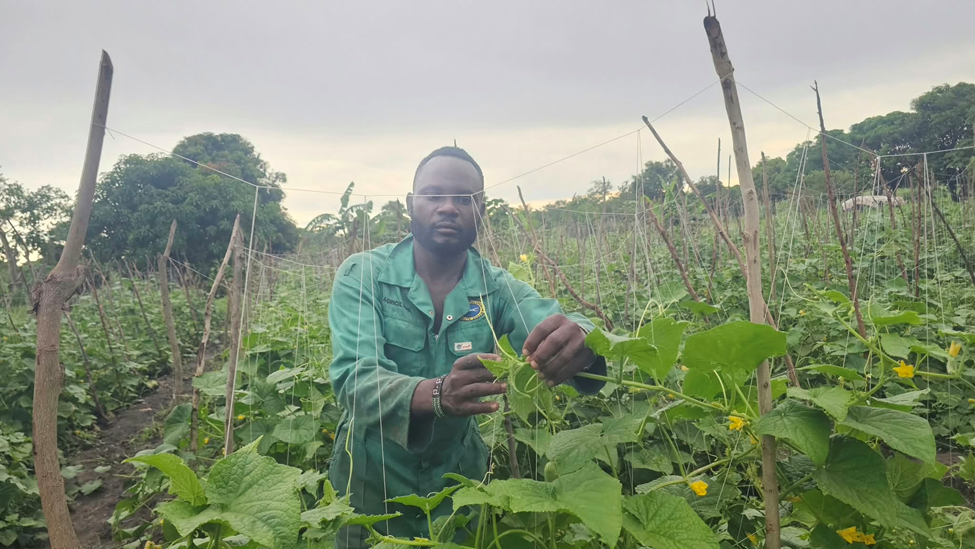
What began with a $700 investment in 2021 has grown into an agricultural enterprise employing 10 workers. In Rajaf, South Sudanese farmer John Ladu is building a farming business aimed at increasing local food production and creating employment opportunities for young people.
Commonly known as Amos, Ladu operates Viable Aid Farms, which he formally registered in 2024 after starting out as a traditional farming venture. He now cultivates 3.5 acres of land, growing fruit and vegetables while gradually investing in equipment to support production.
His journey reflects the potential of small-scale agriculture to create livelihoods and contribute to South Sudan’s efforts to strengthen domestic food production.
“If you look at our country, South Sudan now, there’s a lot we can do in terms of improving our production,” Ladu told the Dawn newspaper in an exclusive interview.
He said his decision to venture into agriculture was driven by the potential of local production to strengthen the national economy and reduce dependence on imported food.
“We import food from outside when we have the necessary skills and the power to do what other people can do,” he said.
Creating jobs through agriculture
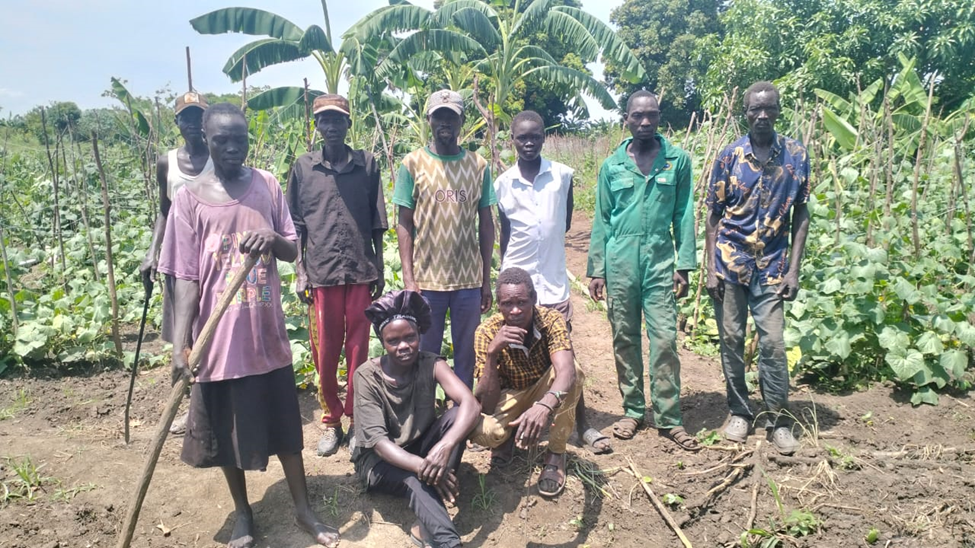
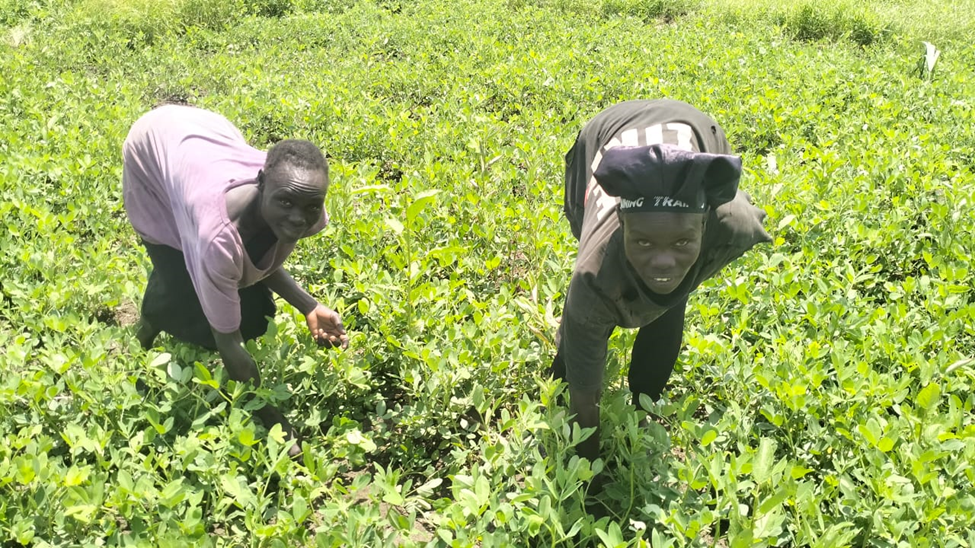
Beyond growing crops, Ladu has created employment opportunities for 10 local workers, comprising eight men and two women. The workers assist with weeding and other farm activities, earning income while gaining practical experience in agriculture.
“Currently, I have ten people working with me on the farm,” he said. “These are non-skilled laborers, mainly helping with weeding. Professionally, I am the one leading because I am the only person with the specialized skill.”
Ladu hopes to expand the farm into a larger agricultural enterprise over the next five years, increasing production to supply local markets and contribute to the country’s food supply.
To generate income for expansion, he focuses on crops that mature relatively quickly, including cucumbers and watermelons.
“I use quick crops to generate income for farm expansion. I grow cucumbers and watermelons,” he explained.
Although his business plan required $3,000 in start-up capital, Ladu began with just $700. He said the initial investment helped him expand the farm from 1.5 acres last year to 3.5 acres this year.
He also reported approximately $1,500 in sales from the initial investment, although he did not specify the period covered by the sales or the farm’s operating costs.
“The sale now is from a seven-hundred-dollar investment. Now it is one thousand five hundred dollars,” he said.
Among the gains from the business, Ladu said, are a water pump and basic irrigation equipment, which he acquired to support farming activities.
“So far, I have achieved a water pump and simple irrigation equipment. That is what the farm has already given me currently,” he said.
Challenges to agricultural growth
Despite the progress, Ladu faces several challenges that threaten the farm’s expansion, including drought, limited access to finance and a shortage of skilled agricultural workers.
Delayed rainfall has affected farming activities, while insufficient capital has limited his ability to increase production and invest in modern agricultural technologies.
To address some of these constraints, he hopes to introduce greenhouse farming and mechanized equipment to improve productivity and make the business more sustainable.
Ladu also aims to develop Viable Aid Farms into a model agricultural enterprise employing more than 20 people within the next five years.
However, finding qualified workers remains a concern. He said many people with agricultural skills prefer office-based employment, making it difficult to recruit workers with the expertise needed to support the farm’s growth.
He called on government institutions, private-sector actors and international organizations to establish practical partnerships with local farmers to improve access to financing, skills development and agricultural technology.
A source of livelihood for workers
For the people employed at Viable Aid Farms, the benefits of agriculture extend beyond food production to meeting essential household needs.
Santino Ladu, one of the farm’s employees, said his work provides income that helps him support his family, particularly by paying school fees and covering medical expenses for his children.
“Farming is very important. The work I do here helps me pay school fees for my children and use the money to treat them when they get sick,” he said.
His experience highlights the role small-scale farming can play in supporting household livelihoods and helping families meet basic needs.
John Marcelo, another employee who has worked at the farm for a year, also encouraged South Sudanese to embrace agriculture as a way of increasing food production and addressing hunger.
“Agriculture is very important, and I encourage my fellow South Sudanese to embrace agriculture and food production because agriculture is what can save us from hunger,” Marcelo said.
Looking ahead
For Ladu, the ambition extends beyond cultivating 3.5 acres of land. He hopes to expand production, introduce modern farming methods and create more employment opportunities for young people.
His experience demonstrates how a modest initial investment can help establish an agricultural enterprise, although access to capital, reliable rainfall, irrigation and skilled labour remain important factors in determining how far the business can grow.
As South Sudan seeks to increase domestic food production and reduce reliance on imports, farmers such as Ladu are looking to agriculture not only as a means of earning a living but also as a business capable of supporting workers, strengthening local markets and creating opportunities for the next generation.



Join the conversation
Keep contributions respectful, relevant and suitable for a public newsroom.