
By Simon Deng
South Sudan is developing a Trade Policy Framework (TPF) and a Country Programme Document (CPD) to strengthen its integration into regional and global markets. These initiatives are expected to guide the country’s trade and investment priorities in the coming years.
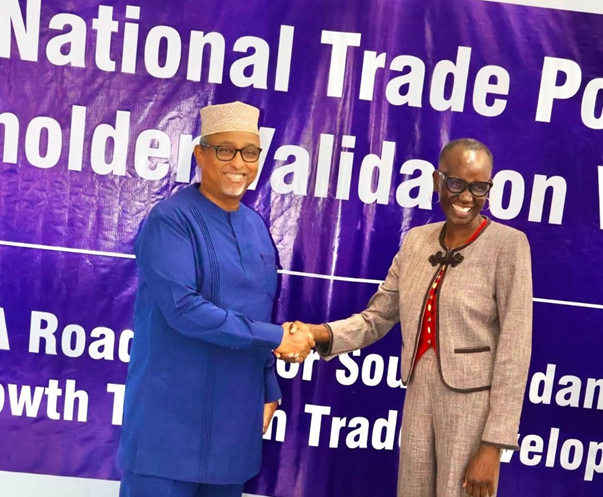
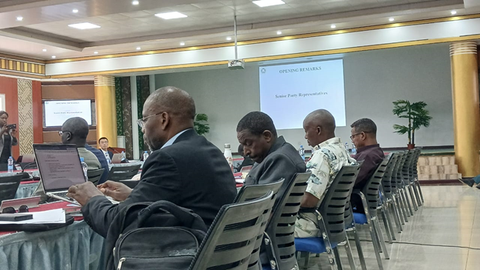
Speaking on Wednesday at the close of a two-day validation workshop on trade policy and the Enhanced Integrated Framework (EIF) at Palm Africa Hotel, Mohamed Abchir, the United Nations Development Programme (UNDP) Resident Representative, noted that the government and its partners have advanced these frameworks to support trade integration and align investment priorities with national development strategies.
Abchir explained that the CPD will serve as a nationally owned, strategic framework, spanning up to five years, outlining South Sudan’s trade and investment priorities, proposed interventions, and implementation arrangements.
This framework is aligned with national development strategies.
He added that the CPD was co-created with the EIF partnership as a national priority trade program. Its primary purpose is to engage all partners, coordinate and mobilize resources, and act as a catalytic vehicle for accessing EIF funding.
The agricultural sector is crucial to South Sudan’s economy, contributing approximately 15 percent to its non-oil gross domestic product, with 80 percent of households relying on cultivation as their primary livelihood.
The Enhanced Integrated Framework (EIF) is a multilateral partnership dedicated to helping least developed countries (LDCs) utilize trade as a driver for growth, sustainable development, and poverty reduction.
South Sudan’s Trade Policy Framework (TPF) was updated in 2018. The 2018–2021 TPF incorporates requirements stemming from South Sudan’s East African Community (EAC) integration process and its future accession to the World Trade Organization (WTO).
Margret Labanya, the Minister of Trade, stated that South Sudan possesses vast natural resources and economic potential that can accelerate trade facilitation and improve citizens’ living standards.
Labanya disclosed that the TPF and CPD are anchored in the national Prioritized Action Matrix (PAM) on trade and investment-related technical assistance, which provides a baseline for partner alignment, sequencing, and progress measurement.
She emphasized that the primary objective of the workshop was to validate the draft TPF and CPD, ensuring their alignment with South Sudan’s national development priorities and stakeholder expectations.
The TPF’s vision is to achieve development through trade diversification, consistent with the South Sudanese government’s objective of fostering a growing, sustainable, diversified, and competitive economy with an efficient domestic market.
Despite its significant agricultural potential, South Sudan remains food insecure, import-dependent, and suffers from low agricultural productivity, with oil production accounting for up to 90 percent of its export earnings.

Join the conversation
Keep contributions respectful, relevant and suitable for a public newsroom.