
By Awan Achiek
Sudanese refugees fleeing conflict are finding greater safety, dignity, and hope at Wedweil Refugee Settlement in Northern Bahr el Ghazal State, where newly constructed temporary and transitional shelters are improving living conditions for vulnerable displaced families.
Built by the United Nations Refugee Agency (UNHCR), the shelters provide safer accommodation and protection for families as they rebuild their lives far from home.
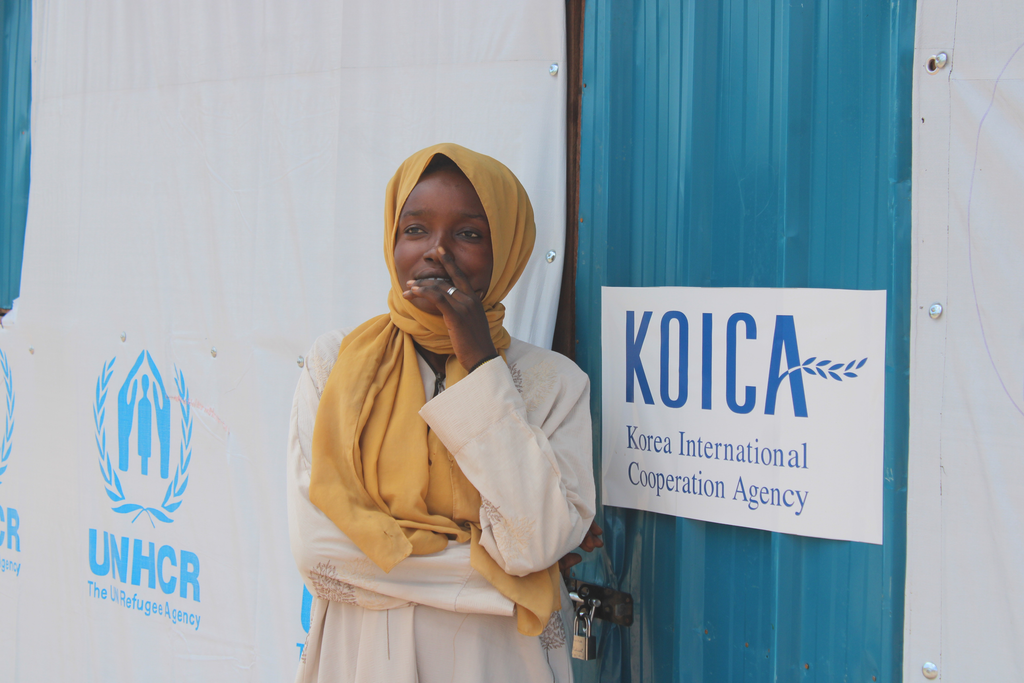
For Ikilas Abdulrahman, a 34-year-old mother of three, receiving a one-bedroom house equipped with a latrine has been a life-changing experience.
“The tents we were living in at the camp were in poor condition, but now they have built me a good house with a proper latrine, which has changed my life,” Ikilas said.
Ikilas fled violence in Sudan in 2024 with nothing. After receiving a house at Wedweil Refugee Settlement, she said her family could now live in better conditions.
“This place is much better than the camp where we used to stay. We are now sleeping peacefully and living happily,” she said.
With funding from the Korea International Cooperation Agency (KOICA), UNHCR constructed 146 emergency shelters at Wedweil Refugee Settlement, each equipped with a transitional latrine.
The project forms part of a broader initiative to respond to the Sudan crisis by providing life-saving assistance in key locations, including Maban, Jamjang, Renk, Bor, and Aweil.
The initiative aims to build safe and resilient communities by improving shelter, water, and sanitation services, strengthening protection mechanisms, and promoting peaceful coexistence among refugees, returnees, and host communities.
New Shelters Bring Relief to Vulnerable Families
Kamla Mary, a 30-year-old mother of three from Ethiopia, is another refugee benefiting from the improved shelter conditions. She said her new accommodation was better than the shelter she had previously occupied in the main settlement.
Mary, who fled violence in Sudan in 2025, moved into her new home in Wedweil Refugee Settlement ten days before speaking about her experience.
“We thank God that since we arrived here, we have been given a nice house with a latrine. This is very good, and I am happy for this gift,” Mary said.
Despite the improved living conditions, Mary expressed concern about theft in the settlement, saying people were stealing the few belongings and resources that residents possessed. She appealed to state authorities to address the problem and improve security.
“The UNHCR has helped us a lot, and we are grateful for its support in providing us with a house. But we appeal to the authorities to address the issue of theft,” she said.
Clean Water Helps Refugees Grow Crops and Earn Income
Beyond shelter, access to clean water is also helping refugees improve their livelihoods and meet their families’ basic needs.
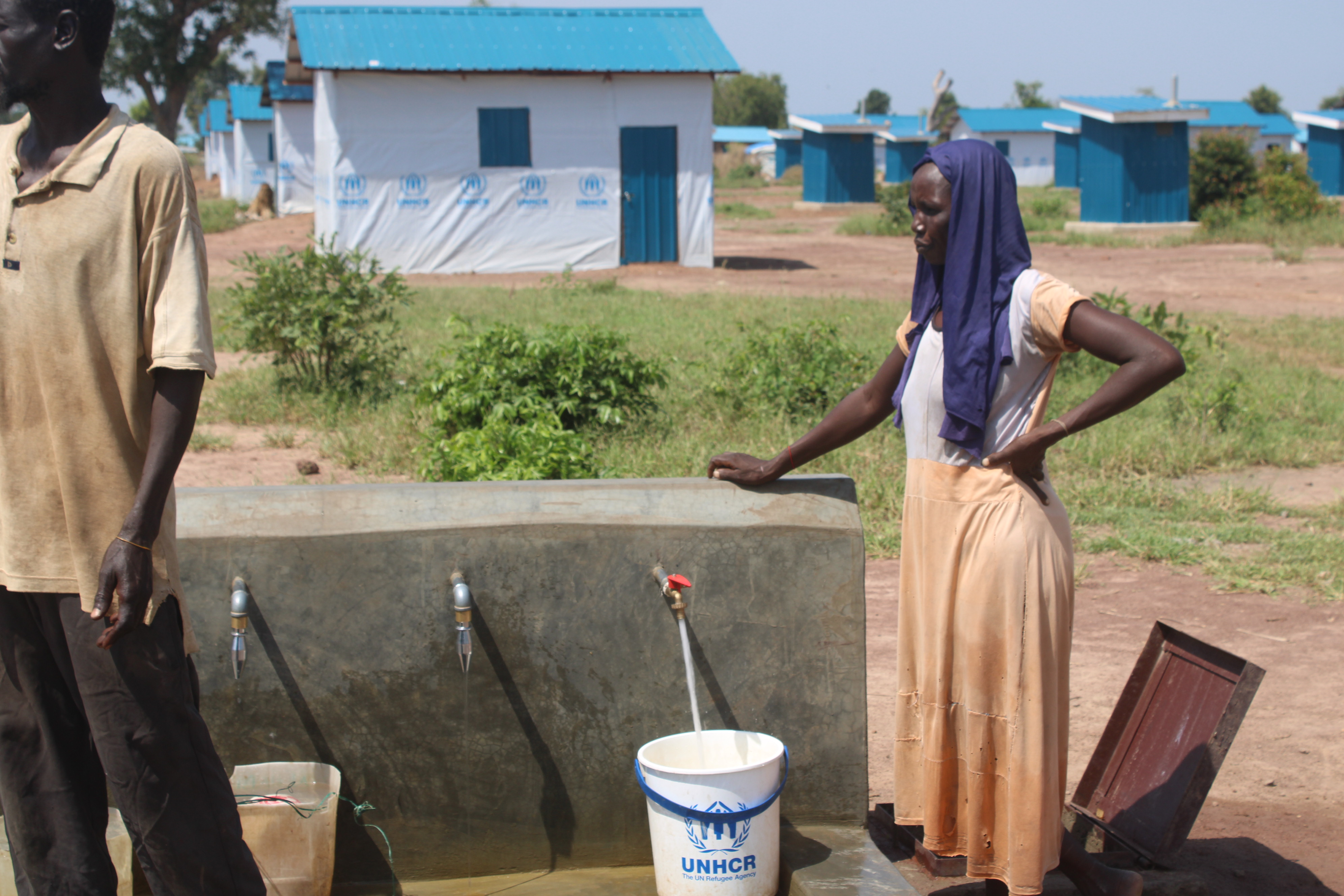
In September 2026, UNHCR, with support from KOICA, repaired four water facilities in Blocks 15 and 16, providing clean drinking water to 6,000 households in the settlement.
Gazim Santo, 40, who arrived in Northern Bahr el Ghazal State from Al-Jazira in Sudan in December 2024, now uses water from one of the facilities to irrigate his garden, where he grows okra, groundnuts, and other vegetables.
Santo said the garden provides food for his family while generating income to help him meet essential household needs.
“I earn money from the crops I grow in this garden. I use the money to buy sugar and other basic necessities. I also share the food from this garden with my brothers,” Santo said.
The wider initiative aims to assist more than 30,000 refugee and returnee households while strengthening community engagement to address protection challenges. It also aligns with South Sudan’s National Durable Solutions Strategy and the Area-Based Roadmap for Upper Nile State.
The initiative is part of KOICA’s global Conflict-affected and Fragile Countries Supporting Programme (CFP), a multi-year effort designed to strengthen the Humanitarian-Development-Peace Nexus in fragile contexts. The programme is currently being implemented in Burundi and South Sudan.
Farming Creates Livelihood Opportunities for Refugees and Host Communities
Agriculture is also emerging as an important source of food and income for refugees, returnees, and members of host communities in the area.
Mubarak Ahmed Musa, chairperson of the Roots of Renaissance for Agriculture Organization (RRADO), said UNHCR had supported refugees and host communities through farming initiatives aimed at increasing agricultural production and improving livelihoods.
Ahmed, 37, said the organisation had established a 440-feddan farm where 460 farmers, including refugees, South Sudanese returnees, and members of the host community, cultivate crops such as groundnuts, okra, tomatoes, and watermelons.
“We are appealing for more support, including hoes and other farming equipment, to help refugees and members of the host community increase agricultural production,” Ahmed said.
He added that approximately 160 women from refugee and host communities were involved in farming, with refugees making up the majority of the farmers.
Ahmed also highlighted the potential of agriculture to generate income, citing watermelon production as an example. He said sales had reportedly reached $200.
Wedweil Hosts Thousands of Displaced People
Wedweil Refugee Settlement currently hosts approximately 38,000 people, 80 per cent of whom are from Sudan, the Democratic Republic of the Congo (DRC), the Central African Republic (CAR), and Ethiopia.
Stephen Anhiem, Wedweil Camp Coordinator for the Commission for Refugee Affairs (CRA) in Northern Bahr el Ghazal State, said authorities had allocated land to refugees and returnees for settlement and farming.
“Many refugees who have farms within their blocks are now growing vegetables and other crops to support themselves,” Anhiem said.
He added that UNHCR had constructed temporary and transitional shelters for refugees and returnees to improve their living conditions.
According to Anhiem, the transitional shelters feature cemented floors, iron-sheet roofing, and plastic sheeting around the sides.
“These shelters are designed to accommodate the most vulnerable refugees and returnees, including separated and unaccompanied children, widows, and elderly people,” he said.
For families who have fled conflict and lost their homes, access to safer shelter, clean water, and opportunities to grow food can provide an important foundation for rebuilding their lives in South Sudan.
Join the conversation
Keep contributions respectful, relevant and suitable for a public newsroom.