
By Simon Deng
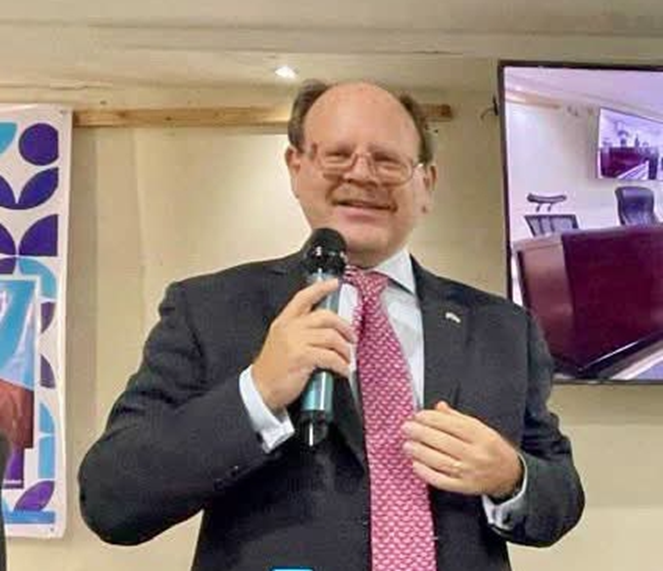
The Outgoing British Ambassador David Ashley has called on South Sudan’s caretaker government to prioritize long-term development by investing in education, health, and nutrition.
This comes as Britain continues to provide emergency assistance despite declining aid levels.
Ambassador Ashley, speaking on Friday at a public lecture titled “My time in South Sudan: reflection and road ahead” at the University of Juba, urged the government to take greater responsibility for its citizens’ well-being.
He noted that the British government still allocates $100 million to provide emergency kits to 1.2 million people in South Sudan, even with reduced overall aid.
“We have long-term efforts, and these need to be led by the government. Investment in education, health, and nutrition is a crucial contribution to economic development,” Ashley stated.
He emphasized the government’s role, asserting, “It is the government’s job to pay for teachers and provide skills and quality education.We cannot ask British taxpayers to contribute to the health and education of South Sudanese children if the government of South Sudan is unwilling to contribute.”
Ashley revealed that the British government is collaborating with development partners to tackle critical issues such as education, malnutrition, and malaria nationwide.
He also highlighted that a significant portion of their contribution supports women,particularly through Village Saving Loan Associations (VSLAs) in Renk, Upper Nile state.
“Our system is not just about life-saving but also about building sustainable lives. We have supported 1.5 million children,largely girls and children with disabilities,” he explained.
“We have concentrated for many years on health and education. There are huge needs for education, and we will continue to focus on education, health, and humanitarian assistance.”
Join the conversation
Keep contributions respectful, relevant and suitable for a public newsroom.