
By Awan Achiek
The government of South Sudan has launched a national population-based cancer registry to strengthen disease surveillance, improve healthcare planning, and support more effective prevention and treatment strategies.
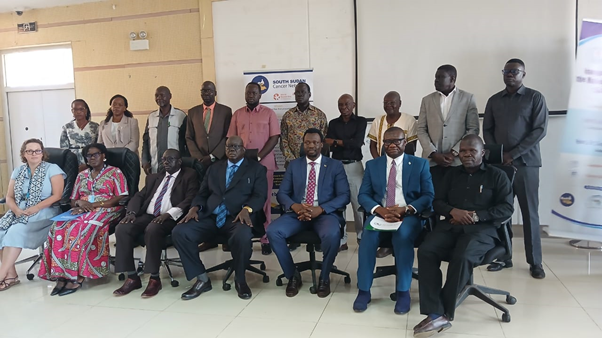
The Ministry of Health, in partnership with the World Health Organization (WHO), the International Agency for Research on Cancer (IARC), and the African Cancer Registry Network (AFCRN), officially launched the initiative on Thursday at Juba Teaching Hospital.
The launch marks a significant step towards establishing a data-driven approach to understanding and addressing the cancer burden across the country.
The new system will collect, analyze, and report cancer data nationwide, providing vital information on cancer cases, trends, distribution, and patient outcomes.
Speaking during the launch ceremony, Dak Duop Bichok, caretaker minister of health, said the data collected would guide policy decisions, improve resource allocation, and strengthen cancer prevention and control programmes.
“The inauguration of the Juba Population-Based Cancer Registry is not merely the opening of another health facility. It is a crucial step toward understanding the cancer burden in South Sudan and making informed decisions regarding prevention and treatment,” Duop said.
He revealed that South Sudan had recorded an estimated 8,124 new cancer cases and 5,128 cancer-related deaths, while 11,645 people were living with cancer over the past five years.
Duop said the establishment of the registry would enable the country to generate its own reliable cancer data rather than relying on information from other countries.
“We are officially integrating the Juba Population-Based Cancer Registry as a vital component of a reliable national cancer information system,” he said.
Mutale Nsakashalo Senkwe, the World Health Organization (WHO) representative in South Sudan, described the registry as a major milestone in strengthening the country’s cancer prevention and control efforts.
“We are pleased that with this National Cancer Registry, we will be able to collect data, which is essential for planning cancer prevention, early detection, treatment, palliative care, and other related programs,” Senkwe said.
She reaffirmed WHO’s commitment to supporting the Ministry of Health through technical assistance, capacity building, and strengthened cancer surveillance as part of broader efforts to address non-communicable diseases.
“The success of this registry will rely on strong collaboration among health facilities, laboratories, health workers, and partners nationwide. Today, we are laying the groundwork for improved cancer surveillance, stronger health systems, and better health outcomes for the people of South Sudan,” she said.
Meanwhile, Dr. Steven Francis, representative of the South Sudan Cancer Network, pledged to promote cancer awareness and advocacy to strengthen prevention and treatment efforts.
“As a member of the South Sudan Cancer Network, we encourage partnerships to demonstrate our collective commitment to strengthening the cancer information system and improving cancer care in South Sudan,” Francis said.

Join the conversation
Keep contributions respectful, relevant and suitable for a public newsroom.