
By Awan Achiek
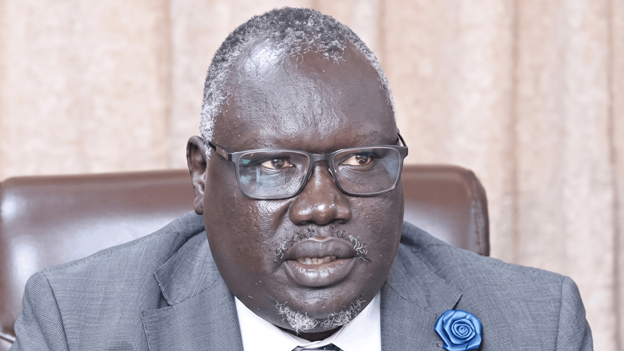
The Chairperson of the South Sudan Political Parties Council (PPC), James Akol Zakayo announced on Wednesday that no armed political parties are currently operating in the country. He affirmed that all registered parties have disarmed and now function as civilian organizations focused on political objectives.
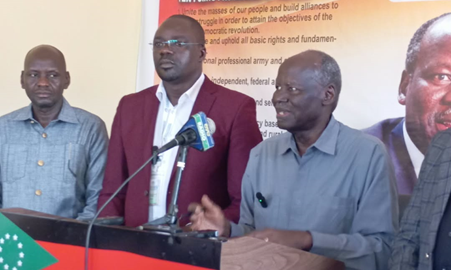
Speaking at the Inter-Party Political Dialogue in Juba, Akol stated, “Currently, in the country, we don’t have armed political parties. Those of us that were part of that group are only part of it. They have relinquished their armed forces. Inclusivity and affirmative action compliance.”
Akol reported that the PPC has successfully validated and reviewed a final list of 46 political parties eligible to appear on the ballot.
He described this as a “historic shift towards institutionalized civilian governance,” marking the fusion of two key developments:
He noted that the SPLM-IO has transitioned from an armed faction into an officially registered and constitutionally compliant political party.
He added, “In addition to IO, we have also validated all the service parties in the South and also retired politicians.”
Akol warned that any registered political party found violating the council’s rules and regulations would face immediate suspension.
“Non-compliance moving forward will result in immediate legislative suspension. Even if you are registered and you happen to be moving forward non-compliant, your plan will be suspended,” he stated.
Akol also revealed that the council has established an Inter-Party Mediation Committee (IPMC), composed of independent experts and civil society observers. This committee will resolve internal disputes, manage political tensions, and prevent institutional gridlock.
“The Inter-Party Mediation Committee (IPMC) will adjudicate all inter-party leadership structures and inter-party boundary or campaign disputes within a strict 48-hour window,” he explained.
He added that if IPMC mediation fails, the matter would be immediately referred to the specialized electoral division of the Judiciary of South Sudan, in coordination with the National Election Commission.
Furthermore, Akol disclosed that the PPC plans to initiate localized workshops in October to train all 46 registered political parties on grassroots voter outreach, poll watching, and non-violent organization.
He concluded by announcing that the PPC is offering a “time-limited window until October 15th for any exiled or boycotting political groups to sign the electoral protocol and legally register their candidates, provided they formally renounce political violence.”


Join the conversation
Keep contributions respectful, relevant and suitable for a public newsroom.