
By Simon Deng
The South Sudan Civil Society Forum is urging a renewed commitment to the 2018 peace agreement, inclusive dialogue, and the protection of constitutional freedoms as the country prepares for elections and strives for sustainable peace and democratic governance.
Lony Ruot, President of the Standard Action Liaison Force (SALF), emphasized the critical need to safeguard constitutional freedoms and ensure that security measures facilitate, rather than unduly restrict, lawful civic and political participation.
“Our assessment indicates that South Sudan’s electoral preparedness is an institutional and systemic responsibility. The identified gaps are not isolated technical issues; they demand coordinated action from electoral bodies, security institutions, the judiciary, political actors, and other relevant stakeholders,” Ruot stated.
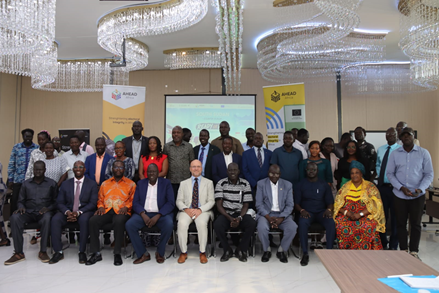
This call follows the 2026 South Sudan Country Forum, held in Juba from September 23–24, 2026, under the theme “Ready or Not: Assessing South Sudan’s Preparedness for the 22 December 2026 Elections.”
The Forum convened a diverse group of participants, including representatives from national institutions, electoral and oversight bodies, civil society organizations, civic networks, women and youth representatives, organizations for persons with disabilities and other marginalized groups, human rights defenders, political and community stakeholders, and regional and international partners.
Ruot revealed that SALF’s June 2026 research assessment estimated the preparedness levels at approximately 35% for the National Elections Commission, 20% for the security sector, and 15% for the judiciary and electoral dispute-resolution mechanisms, against a minimum preparedness benchmark of 50%.
“What is needed now is a coordinated readiness mechanism with clear responsibilities, measurable benchmarks, regular public reporting, and practical measures to address identified financial, logistical, technical, and human-resource gaps,” he asserted.
Similarly, the South Sudanese Network for Democracy and Elections (SSuNDE) and the East and Horn of Africa Election Observation Network (E-HORN) have called for urgent, coordinated, and measurable action to tackle outstanding institutional, legal, operational, security, and civic-space challenges before the scheduled December 22, 2026 elections.
James Okony Dau, Chairman of SSuNDE, noted that the Forum provided a crucial opportunity for national stakeholders to honestly and evidence-basedly evaluate South Sudan’s electoral readiness.
“The Forum’s message is clear: the remaining time necessitates urgent, coordinated, and measurable action by all institutions and stakeholders within their respective mandates,” Dau affirmed.
Dau further stressed the importance of regular public communication and transparency regarding electoral preparations, especially given the compressed electoral timetable and the numerous interconnected tasks yet to be completed.
“An election is not merely an event that occurs on polling day. Its credibility hinges on the preparedness of electoral institutions, an enabling civic and political environment, inclusive participation, reliable information, adequate security, and accessible mechanisms for addressing electoral complaints and disputes.”
Kennedy Masime, Authorized Representative of E-HORN, emphasized that inclusive participation must remain central to the electoral process.
“Women, young people, persons with disabilities, displaced persons, returnees, and other underserved communities must have meaningful opportunities to participate throughout the electoral cycle,” Masime urged.
Masime called upon all relevant institutions and stakeholders to fulfill their respective constitutional, statutory, and institutional responsibilities with urgency, transparency, accountability, and cooperation throughout the electoral cycle.
“We advocate for strengthened civic and voter education, accurate and accessible electoral information, protection of personal and electoral data, responsible media reporting, and an enabling environment for peaceful and meaningful civic and political participation.”
Join the conversation
Keep contributions respectful, relevant and suitable for a public newsroom.