
By Jenifer James
The Relief and Rehabilitation Commission (RRC) has urged 32 South Sudanese civil society organizations (CSOs) to uphold transparency, accountability and sound financial management after receiving grants under a European Union-funded programme aimed at strengthening civil society.
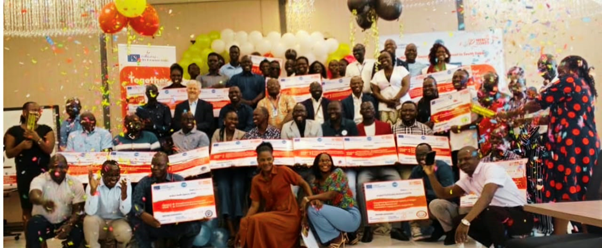
Mach Benjamin, representing the RRC, delivered the message on Friday during a grant award ceremony where Mercy Corps and the Institute for Promotion of Civil Society (IPCS) awarded third-party grants to 32 local organizations under the Supporting Civil Society Empowerment in South Sudan (SUCCESS) Programme.
Benjamin said the grants presented both an opportunity and a responsibility for beneficiaries to demonstrate effective financial management and deliver meaningful results to communities.
“This award is both an opportunity and a responsibility,” Benjamin said, stressing that the funds must be used strictly for their intended purposes.
He called on the organizations to maintain proper financial documentation, submit comprehensive reports and uphold accountability throughout project implementation.
Benjamin also urged the organizations to promote inclusive participation by involving women, youth, persons with disabilities and other marginalized groups in decision-making processes.
He encouraged the beneficiaries to strengthen coordination with government institutions, local authorities, traditional leaders, development partners and communities to support effective project implementation.
Benjamin further urged the organizations to prioritize sustainability from the beginning of their projects so that the structures, partnerships and solutions developed through the grants continue benefiting communities beyond the funding period.
The grants were awarded under the four-year SUCCESS Programme, funded by the European Union and implemented by Mercy Corps in partnership with IPCS. The programme aims to strengthen locally led development, organizational capacity and community participation across South Sudan.
Under the funding arrangement, civil society and community-based organizations received US$5,688 each, national organizations received US$45,500, while networks and coalitions received US$68,000.
Kubako John Joseph, IPCS Head of Programmes, described the awards as a significant milestone in empowering local organizations to address challenges within their communities.
“When we launched this call for proposals, our goal was very clear: to find visionary partners who understand local challenges and possess the grassroots network to drive real, lasting change,” Joseph said.
He said successful applicants were selected through a competitive proposal process based on their innovative ideas, community connections and experience in addressing local challenges.
Joseph said complex community challenges require collective action rather than isolated interventions, describing the grants as investments in local leadership, organizational expertise and communities.
He urged beneficiaries to maintain transparency, demonstrate local leadership and deliver measurable results, while assuring them of continued technical and capacity-building support from Mercy Corps and IPCS.
Lydia Milla, Mercy Corps SUCCESS Programme Manager, said the grant awards marked the next phase of an initiative that began in January 2025.
Milla said 40 organizations initially participated in the broader capacity-strengthening process. Following training, coaching, mentorship and organizational assessments, 32 organizations advanced to the third-party grant phase.
“This is a milestone from the rains, the rough roads. At least we should be happy that we are here today,” she said.
She explained that the programme seeks to strengthen the capacity, resilience and sustainability of civil society organizations, enabling them to contribute to community development, social cohesion, accountability and inclusive governance.
Milla also highlighted improvements in organizational policies, financial management, auditing and monitoring systems among participating organizations.
She encouraged the grant recipients to use the opportunity to demonstrate how locally rooted organizations can deliver meaningful results for their communities.
Mercy Corps Country Director Darius Radcliffe said the ceremony represented more than the signing of grant agreements, describing it as recognition of the vital role local organizations play in sustainable development.
“It is a recognition of the commitment and the vital role that local organizations play in driving sustainable change within their communities,” Radcliffe said.
He said lasting development depends on local actors having the capacity, resources and confidence to lead solutions to challenges affecting their communities.
Radcliffe congratulated the beneficiaries for completing the capacity-building process and recognized the contributions of partners and other stakeholders involved in the initiative.
The SUCCESS Programme partners said the implementation phase would focus on translating strengthened organizational systems into effective community-level interventions while promoting local ownership, accountability and measurable results.
Mercy Corps and IPCS said they would continue providing technical support to the 32 organizations as they implement their respective projects.


Join the conversation
Keep contributions respectful, relevant and suitable for a public newsroom.