
By Simon Deng
Refugees in South Sudan are calling for stronger protection, easier access to essential services, and greater recognition of their rights, citing persistent challenges with movement, documentation, registration, and livelihoods.
Omot Obang, Chairperson of Gorom Refugee Settlement, stated on Monday that some refugees traveling to Juba for business, shopping, or work risk arrest when security personnel question their identification documents. Additionally, newly arrived refugees face difficulties accessing healthcare and other essential services because they remain unregistered.
“Gorom hosts approximately 18,802 registered and verified refugees from around 11 nationalities and has existed for nearly 16 years,” Obang noted.
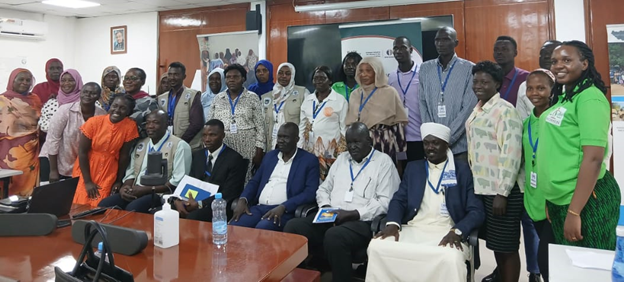
He made these remarks at an event that brought together refugee representatives, government officials, UNHCR, national and refugee-led organizations, women-led groups, and civil society. The event highlighted a shared commitment to strengthening skills and advancing program objectives.
Obang specifically called for refugee documents to be clearly recognized by security authorities to allow refugees to move without discrimination.
“Food insecurity is another concern; refugees have been informed that cash assistance would end after September, creating uncertainty for families,” Obang added, reiterating the challenges faced by unregistered newcomers in accessing vital services.
Raga Gabriel Berberi, the Executive Director of the Commission for Refugee Affairs, reaffirmed South Sudan’s open-door policy and the government’s full commitment to providing protection to refugees.
“The government’s responsibility is to protect refugees and facilitate access to services.If you keep quiet without airing your views, nobody will support you,” Berberi stated.
The dialogue was convened by Women for Justice and Equality (WOJE) in collaboration with SIHA Network, with support from the Black Feminist Fund.
Zebib Musa,the Executive Director of WOJE, urged stakeholders to treat refugees as active participants in shaping solutions, rather than merely recipients of assistance.
Musa highlighted that the growing refugee population is straining health facilities serving both refugees and host communities, forcing families to make difficult choices between medical treatment and basic household needs.
“The well-being of refugee women is very important; any arising challenges directly affect children and families,” Musa emphasized.
“The dialogue called for stronger coordination, meaningful refugee participation, and durable solutions that uphold dignity, opportunity, and equal protection,” Musa concluded.
Join the conversation
Keep contributions respectful, relevant and suitable for a public newsroom.