
By Awan Achiek
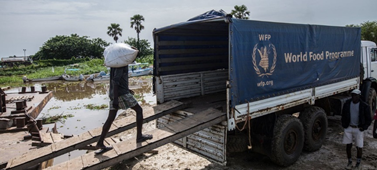
The World Food Programme (WFP) has confirmed that an estimated 162.54 metric tons of food assistance, intended to support 4,400 vulnerable people for three months in Mogok, was forcibly removed from a WFP convoy in Upper Nile State.
This food assistance was part of a larger humanitarian convoy transporting supplies to communities facing acute food needs in the state.
WFP reported that the remaining convoy team and assets, including personnel from its cooperating partner Action Against Hunger (ACF), were secured following the incident.
The U.N. agency condemned the incident, which involved the forced offloading of humanitarian food assistance during a recent river convoy operation in Ayod County, Jonglei State.
“An estimated 162.54 metric tons (MT) of food assistance—intended to feed 4,400 vulnerable people for three months in Mogok—was forced off the convoy,” WFP stated in a Monday press release.
WFP further explained that the incident occurred on September 29 when armed youth in Chuilbong assaulted and threatened two humanitarian staff members at gunpoint.
The U.N. agency noted that their actions prevented life-saving food assistance from reaching government-controlled Mogok.
It added that the incident regrettably transpired in the presence of local authorities, despite extensive negotiations to secure safe passage for the river convoy from Chuilbong to Mogok (Ayod North) and onward to Ayod South.
“Faced with persistent resistance and the inability of local authorities to guarantee safe passage or exercise effective control,
and to ensure the immediate physical safety of its personnel, WFP instructed the convoy team to offload food commodities under duress,” the statement read.
WFP called on all parties to the conflict to respect their obligations under international humanitarian law and to protect civilians and civilian infrastructure.
It emphasized the need for authorities to ensure the safe and unimpeded movement of humanitarian personnel and cargo.
“Aid workers are not, and must never be, a target. They must be protected from violence, threats, and intimidation so they can safely deliver life-saving assistance to communities in need.”

Join the conversation
Keep contributions respectful, relevant and suitable for a public newsroom.