
By Simon Deng
The Deputy Chairperson for the Country Coordination Mechanism, Marial Cuir, said on Tuesday that South Sudan is required to contribute 9 million US dollars under the Global Fund Grant Cycle 8 to support efforts to combat malaria, tuberculosis (TB) and Human Immunodeficiency Virus (HIV).
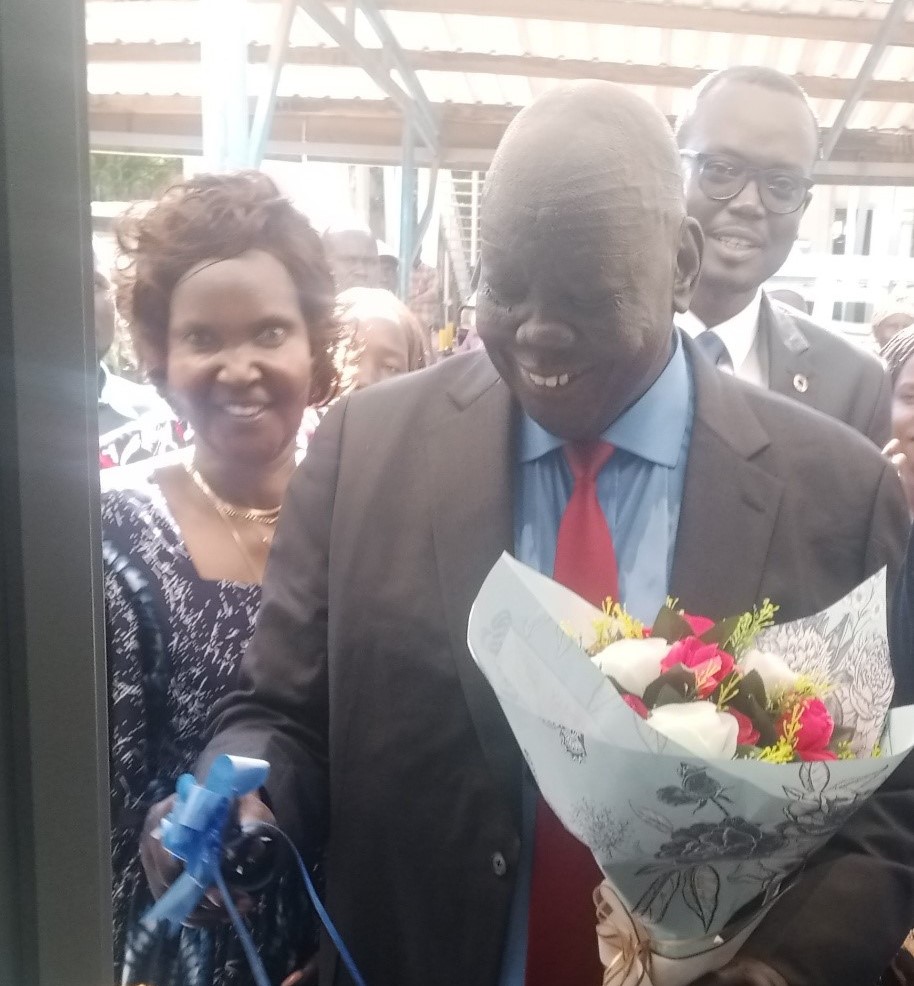
Marial disclosure this on Tuesday during reception ceremony for newly appointed Caretaker Minister of Health Dak Duop Bichiok.
“We managed to receive 129 million dollars to support the three diseases in Grant Cycle 8 (GC8) that is going to start on January 1, 2028 for three years. This amount is conditioned with co-financing obligation, the country should put in 9 million dollars as its contribution to fight the three diseases,” said Marial said.
He said the mechanism is mandated to mobilize resources from the Global Fund to combat three major diseases: malaria, tuberculosis (TB), and HIV.
“Our mandate is to mobilize resources from the Global Fund to fight three diseases, malaria, TB and HIV. The ministry of Health is leading the co-financing. This country is under additional safeguard policy; HIV and TB money sitting with the UNDP. Malaria money sitting with the UNICEF,” he said.
For his part, Caretaker Minister of Health Dak Duop Bichiok pledged to work closely with health partners who have demonstrated their commitment to saving lives and improving the health and well-being of the people of South Sudan.
“This ministry is an important national institution entrusted with the lives, health, and well-being of the people of South Sudan. Therefore, our collective responsibility is to protect, improve the health of our citizens and ensure quality health services reach our people across the country,” said Bichiok.
Meanwhile, Moses Ongom, the officer in charge for the World Health Organization (WHO), said the health landscape required close collaboration to ensure health services reach to all areas across the country.
“The health landscape requires a deep collaboration. No single entity can solve systemic health challenges in the South Sudan alone. We stand ready to co-design and support sustainable long-term interventions that will improve public health outcomes in South Sudan,” Ongom said.
Ongom said the lead health agency continues to sustain health programmes, disease surveillance and essential health-system functions despite declining external funding and limited domestic financing for the health sector.
“While at the same time maintaining provision of essential health services across the board, we are eager to align with health ministry vision and to collectively execute its policy and strategic objectives to improve the health and well-being of all the citizens of South Sudan.”
Adeng Andrew Malual, the Undersecretary for the national Ministry of Gender, Child and Social welfare, urged the national ministry of health to invest in maternal and newborn health across the country.
“We cannot build an equitable health system while essential services remain concentrated in urban centers and communities elsewhere travel for hours or days to obtain basic care,” said Malual.
“We must continue to strengthen primary health care, outreach and mobile services, community health workers, workers’ referral system and the supply of essential medicines, maternal and newborn health, must remain a national priority.”
Tolbert Geewleh Nyenswah, the Country Director for the Africa Centres for Disease Control and Prevention (Africa CDC), said the continental public health agency is expanding its partnerships beyond the national level to strengthen collaboration at the continental level.
“Africa CDC is here to make sure that South Sudan is prepared to respond prepared and adequately to deal with diseases and other priority health issues. This is not merely a simulation exercise, but a real situation management,” Nyenswah said.
“Africa CDC stands ready to support the health ministry in capacity building in areas of disease surveillance, laboratory capacity building, infectious disease prevention and control, and other health care.”
Join the conversation
Keep contributions respectful, relevant and suitable for a public newsroom.