
By Simon Deng
South Sudan has heightened its Ebola preparedness and surveillance measures following Kenya’s confirmation of its first imported case of Bundibugyo Ebola virus disease.
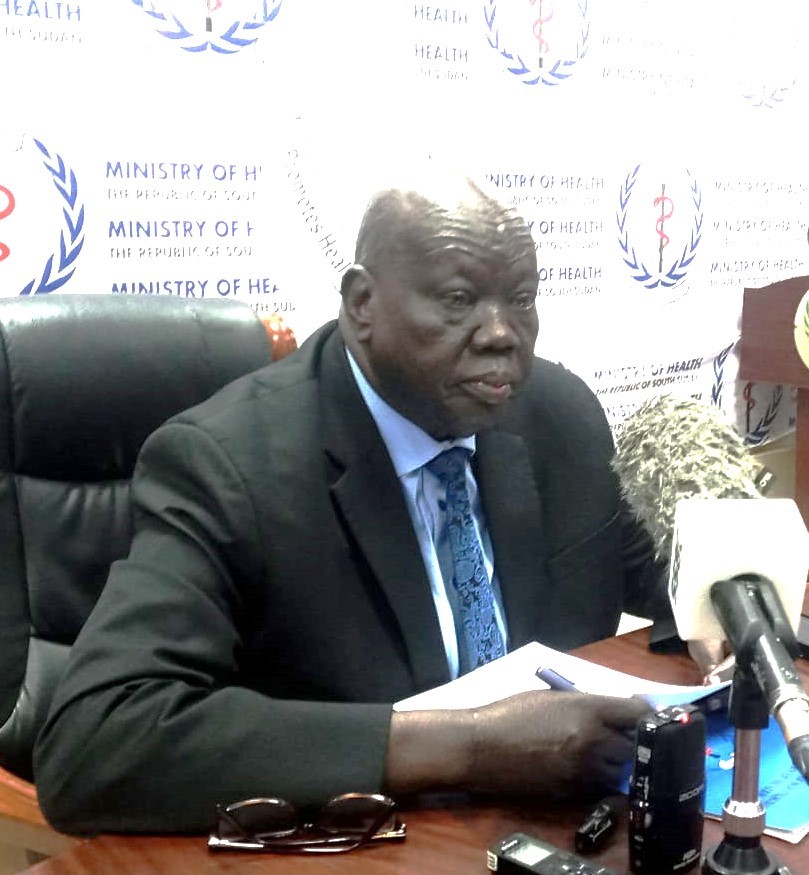
Addressing journalists at a press conference in Juba on Wednesday, Caretaker Minister of Health Dak Duop Bichiok said the national health system has been placed on high alert as the government monitors the regional situation.
“The Ministry of Health of the Republic of South Sudan is closely monitoring the evolvement of a situation in the East African region following the official confirmation by the Minister of Health of the Republic of Kenya of its first import,” Bichiok said on Wednesday in a press briefing.
He said no confirmed Ebola cases have been reported in South Sudan.
“There is no confirmed case in South Sudan. However, given our shared borders, a high level of regional mobility and trade routes linked to the affected provinces in the DRC and transit corridors through Kenya and Uganda. Our national health system is on the highest state of alert,” he said.
On October 5, 2026, the Kenyan Ministry of Health, confirmed its first imported case of Ebola virus Disease (EVD), with death of a Kenyan national, previously living in the Democratic Republic of Congo, before he travelled by road to Kampala, Uganda and finally by air to Nairobi, Kenya.
Bichiok said the confirmation of the outbreak in Kenya increased the risk of cross-border transmission, adding that the government remains vigilant and has strengthened surveillance at points of entry.
He urged citizens to avoid physical contact with anyone showing signs or symptoms of Ebola and to maintain strict hand hygiene by regularly washing their hands with soap and water or using alcohol-based hand sanitizers.
“We urge all the communities, religious and civil society, organization, private sectors, transport operators, and travelers to cooperate fully with the health screening personnel at our borders.”
For his part, Tolbert Geewleh Nyenshwah, the Country Director for the Africa Centres for Disease Control and Prevention (Africa CDC), said South Sudan has made major progress in surveillance, disease detection and outbreak response.
“There is some level of capacity with surveillance, disease detection, and rapid response teams in the country. There are laboratory testing that’s going on in South Sudan, and all partners are coming together and making sure that South Sudan gets prepared,” said Nyenswah.
Meanwhile, Ader Machar Achiek, Acting Executive Director of the Public Health Institute (PHI), said South Sudan has established a rapid response mechanism and reactivated its surveillance system to strengthen preparedness and response to potential disease outbreaks.
“National task force has been formed by His Excellency the President a month before, the teams are on ground, we have people doing screening at the points of entry across the border, in the 15 high-risk counties, as well as Juba International Airport,” said Machar.
“Also, we do have eight health centers or infectious disease units for the case management; they are ready to handle the cases. There are isolation and then infectious disease units,” he said.
Moses Ongom, the World Health Organization (WHO) officer in charge, said they are managing an Incident Management Support Team based in Kampala to coordinate and oversee the regional response.
“Already, a cross-border meeting has been organized over a month ago that put all the countries that are surrounding DRC to come up with interventions and be able to control the spread of Ebola from DRC to the neighbors,” said Ongom.
“The Ministry of Health in collaboration with the National Public Institute and partners has progressively worked hard to improve on the readiness capabilities of the country.”
“As we speak now, the preparedness is 65 percent and one month after May, which is around June, the preparedness was 45 percent, there is a progressive increase in readiness, the infectious disease are in place in most of the priority counties,” he said.
Join the conversation
Keep contributions respectful, relevant and suitable for a public newsroom.