
By Staff Writer
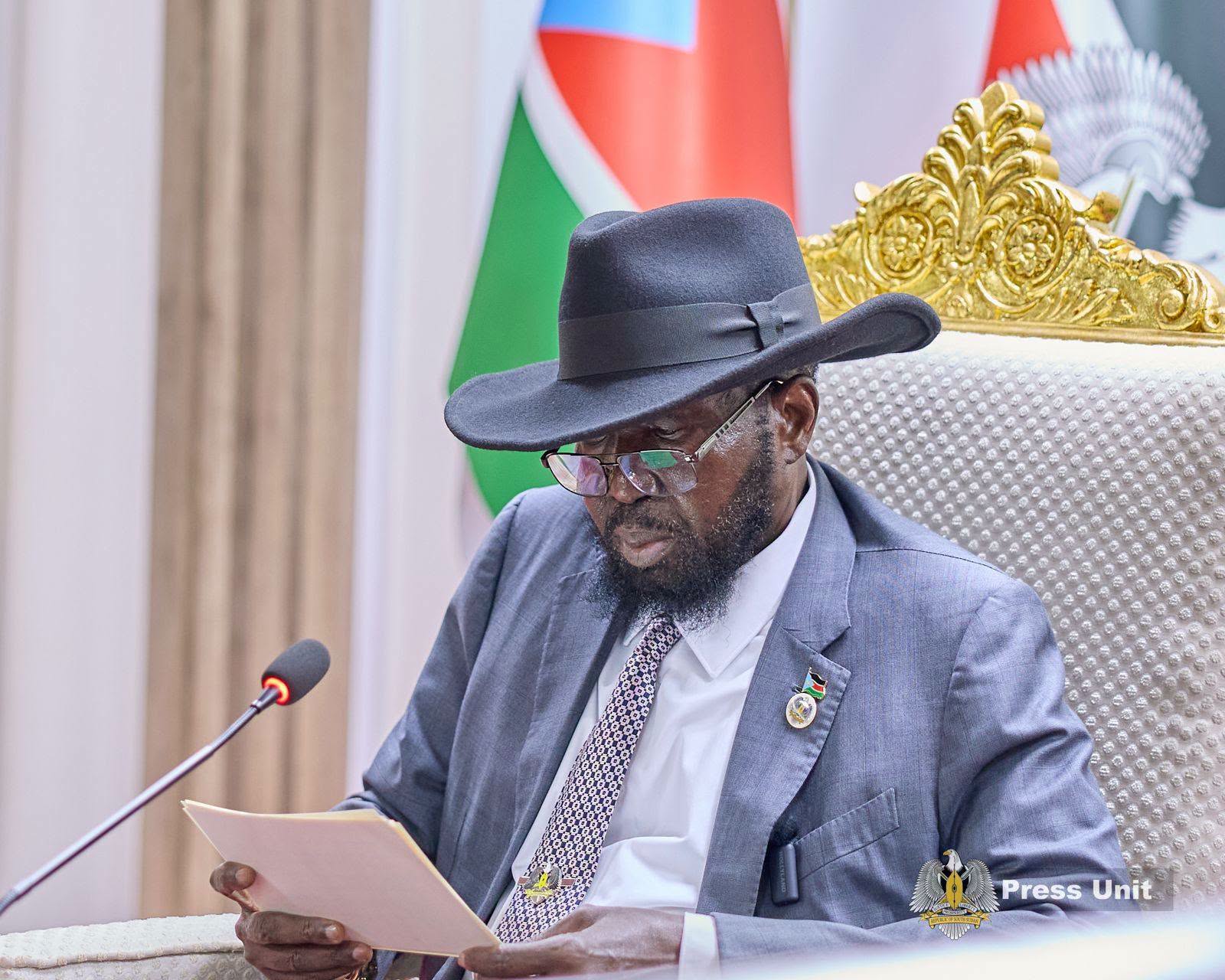
President Salva Kiir Mayardit on Tuesday dissolved South Sudan’s Transitional Government of National Unity, including all vice presidents, national ministers, the Transitional National Legislative Assembly, state governments. This sweeping political restructuring is widely seen as a major step toward the country’s general elections scheduled for December 22, 2026.
In a series of presidential decrees broadcast on the state-owned South Sudan Broadcasting Corporation (SSBC) on Tuesday, President Kiir dissolved these key institutions and appointed caretaker officials to oversee government functions as the country prepares for its first post-independence general elections.
The 2018 peace agreement, signed by warring parties to end the conflict in the country, requires the transitional government to conclude three months before elections. This three-month period expires tonight.
South Sudan is scheduled to hold general elections on December 22, 2026, though preparations for the vote have been delayed, and political disagreements over the electoral process persist.
The Revitalized Transitional Government of National Unity was formed on February 22, 2020, following the signing of the 2018 Revitalized Peace Agreement. The agreement provided for a 36-month transitional period after an eight-month pre-transitional period.
South Sudan’s elections are scheduled for December 22, 2026, after years of delays since independence. The vote is intended to mark the end of the country’s transitional period, which was established under the 2018 peace agreement.
In September 2024, the Parties, by consensus and in accordance with Article 8.4 of the Agreement, extended the Transitional Period by 24 months, from February 22, 2025, to February 22, 2027. They also rescheduled the elections to December 2026. The extension was subsequently ratified by the Transitional National Legislature and assented to by the President of the Republic of South Sudan.
Summary of Caretaker government officials appointed by President Salva Kiir Mayardit
Following the dissolution of the entire Government of the Republic of South Sudan, President Salva Kiir Mayardit has appointed officials to serve in the Caretaker Government pending the conduct of the forthcoming elections.
Presidential Adviser:
1. James Ngere Paciko — Presidential Adviser on Governance
Caretaker Ministers:
1. Africano Mande Gadime — Minister of Presidential Affairs
2. Martin Elia Lumoro — Minister of Cabinet Affairs
3. Amb. Cecilia Adut Manyok — Minister of Foreign Affairs and International Cooperation
4. Ayor Akuoch Anok — Minister of Defence and Veteran Affairs
5. Rizik Zachariah Hassan — Minister of Interior
6. Dr. Wek Mamer Kuol — Minister of Justice and Constitutional Affairs
7. Obote Mamur Mete — Minister of National Security
8. Athian Diing Athian — Minister of Finance and Planning
9. Awow Daniel Chuang — Minister of Petroleum
10. Dr. Labanya Margret — Minister of Trade and Industry
11. Ateny Wek Ateny — Minister of Information, Communication, Technology and Postal Services
12. Michael Makuei Lueth — Minister of East African Community Affairs
13. Stephen Par Kuol — Minister of Peace Building
State Caretaker Governors
1. Augustino Jadalla Wani — Governor of Central Equatoria State
2. Louis Lobong Lojore — Governor of Eastern Equatoria State
3. Moses Majok Gatluak — Governor of Jonglei State
4. Rin Tueny Mabor Deng — Governor of Lakes State
5. Charles Madut Akol — Governor of Northern Bahr el Ghazal State
6. Dr. Joseph Monytuil Wejang — Governor of Unity State
7. James Koang Chuol — Governor of Upper Nile State
8. Bol Wek Agoth — Governor of Warrap State
9. Sherif Daniel Sherif — Governor of Western Bahr el Ghazal State
10. Daniel Badagbu Rimbasa — Governor of Western Equatoria State
Deputy Ministers
1. Philip Jada Natana — Deputy Minister of Foreign Affairs and International Cooperation
2. Marial Chanuong Yol — Deputy Minister of Defence and Veteran Affairs
3. David Marial Gumke — Deputy Minister of Interior
Chief Administrators:
1. Justice Charles Abyei Jok — Chief Administrator, Abyei Special Administrative Area
2. Joseph Baboya Ngere — Chief Administrator, Greater Pibor Administrative Area
3. Daniel Makuei Thiyier — Chief Administrator, Ruweng Administrative Area
Undersecretaries and National Expert:
1. Moris Aduol Dut — Undersecretary, Ministry of Agriculture and Food Security
2. James Alam Ware — Undersecretary, Ministry of Roads and Bridges
3. Deborah Akech Kuocnin — Undersecretary, Ministry of Labour
4. Dr. Malinda Nai Justin — National Expert, Ministry of Labour
Other Presidential Decrees
1. Rizig Dominic Samuel has been relieved of his position as Director General of the National Communication Authority and replaced by Eng. Gieth Kon Mathiang.
2. Dr. Ayiei Garang Deng has been relieved of his position as Director General of the South Sudan Civil Aviation Authority and replaced by Mosety Kat Monyngok.
3. Amb. Moun Deng Ajuet has been relieved of his position as Commissioner General of the South Sudan Revenue Authority and replaced by Rizig Dominic Samuel.
Join the conversation
Keep contributions respectful, relevant and suitable for a public newsroom.