
By Jenifer James
South Sudan is set to launch nationwide consultations on the proposed East African Community (EAC) political confederation. The government plans to gather input from political leaders, civil society, women’s groups, youth, and academics regarding the future of regional integration.
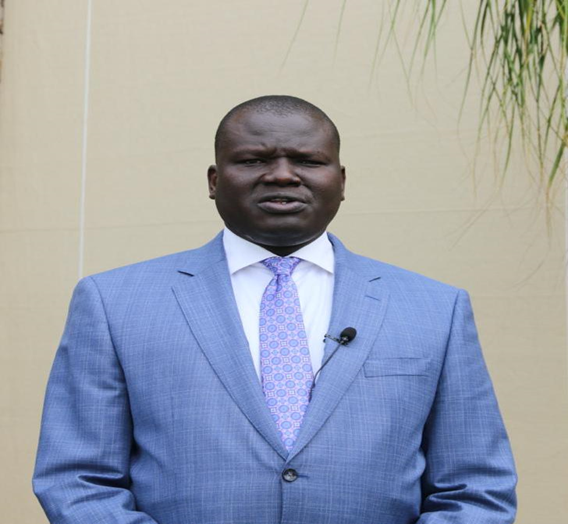
In an exclusive interview with The Dawn Newspaper on Tuesday, Kawaja Kaw Madol, Undersecretary in the Ministry of East African Community Affairs, announced that a team is expected to arrive in Juba on Wednesday to prepare for the consultations. These discussions are slated to run from Juba through October 2026.
He stated that the process will focus on critical areas, including the structure of the proposed confederation, areas of cooperation, decision-making processes, the authority of the confederate leadership, constitutional arrangements, governance, and funding.
According to Kawaja, the consultations will begin by engaging South Sudan’s political leadership in Juba before expanding to selected states.
He emphasized that the process will be inclusive, with civil society organizations, youth, women, and academia also participating.
“It is an inclusive process; nobody will be left behind,” he affirmed.
Kawaja outlined plans for public consultations in Central Equatoria, Jonglei, Western Bahr el Ghazal, and Lakes states. Participants from other states and administrative areas will be invited to these locations.
For example, individuals from other parts of the Greater Bahr el Ghazal region will be brought together during consultations in Western Bahr el Ghazal.
He urged South Sudanese to seize this opportunity to express their views on the future direction of the EAC.
“I ask South Sudanese to seize this opportunity to come out and express their opinion on this consultation because it is something that we are already part of, and we need to express our opinion on how we want East Africa to look like,” Madol said.
He also called on the media to play a crucial role in informing the public, particularly those in both urban and rural areas, about the consultation process.
“The media has a big role. I ask the media to fully participate in this initiative and inform all South Sudanese about the program so that everybody is aware,” he stated.
Kawaja clarified that the benefits should be considered in the context of South Sudan’s membership in the EAC, rather than solely the proposed confederation itself.
He noted that regional blocs are established to strengthen trade, political stability, and security while creating larger markets for member states.
“Countries form regional blocs to actually strengthen trade, political stability and security,” Kawaja explained.
He added that the EAC provides a large regional market, which can attract investment and create opportunities for member states.
Kawaja also highlighted the EAC Common Market Protocol and Customs Union, emphasizing that regional integration fosters opportunities for the movement of people, employment, trade, and cooperation among member states.
“One, the EAC has protocols. That’s the Common Market Protocol. We have the Customs Union,” he concluded.
Join the conversation
Keep contributions respectful, relevant and suitable for a public newsroom.