
By Simon Deng
More than 50 journalists in Juba have been trained to strengthen reporting and public understanding of South Sudan’s Localization Agenda, with organizers urging the media to amplify community voices and promote greater local leadership in humanitarian and development processes.
Oxfam, in collaboration with the Young Women Christian Association (YWCA) South Sudan, trained the journalists on Monday as part of efforts to strengthen the Localization Agenda in the country.
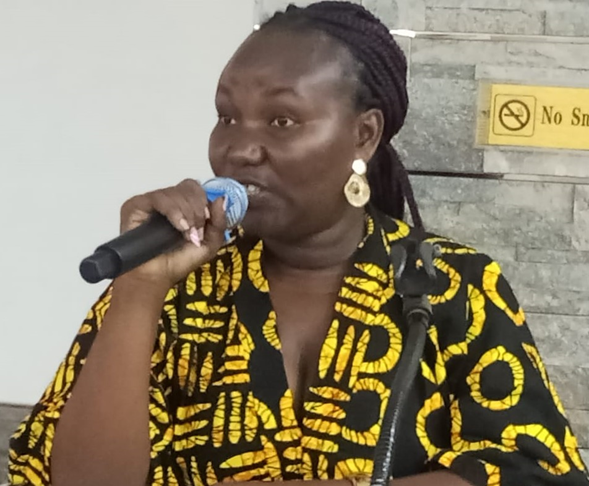
Namisio Joy Bage, Executive Director of YWCA South Sudan, said the roundtable discussion, which focused on strengthening localization, was aimed at ensuring that communities benefit from locally led humanitarian and development efforts.
“As a women-led organization, YWCA South Sudan strongly believes that women, girls, and communities must be at the center of all processes—not simply as beneficiaries, but as leaders, partners, and problem solvers equipped with valuable knowledge and solutions,” Bage said on Monday at the Crown Hotel during the opening of the multi-stakeholder open quarterly localization roundtable dialogue.
“For us, localization is more than just shifting resources. It is about ensuring that local actors, communities, and meaningful voices are placed at the center of decision-making, leadership, implementation, and accountability,” Bage added.
The quarterly localization roundtable, titled “The Role of the Media in Advancing the Localization Agenda in South Sudan,” was held under the theme “Stronger Media Partnership for Locally Led Humanitarian Action in South Sudan.”
Ngbadurezare Michael Franco, Project Officer for YWCA’s Humanitarian System Transformation through Local Humanitarian Leadership project, said the training aimed to explore how the media can actively contribute to advancing localization.
Franco said YWCA is encouraging media practitioners to engage in open, honest, and practical discussions to identify concrete ways the media can help strengthen locally led humanitarian action in South Sudan.
“If localization is to succeed in our country, what can we achieve together as a united team? I know the media has a great role to play and a massive responsibility; media reaches every corner of our society,” Franco said.
“We encourage responsible storytelling that avoids portraying communities merely through the lens of vulnerability, and instead recognizes the resilient leadership, contributions, and solutions of the people of South Sudan.”
The quarterly localization roundtable is intended to help shape the narrative around humanitarian action in South Sudan and strengthen partnerships between the media and local humanitarian actors.
Join the conversation
Keep contributions respectful, relevant and suitable for a public newsroom.