
By Awan Achiek
South Sudan’s registered political parties are calling for unrestricted rallies, meetings, and campaign activities ahead of the country’s general elections scheduled for December. The Sudan People’s Liberation Movement in Opposition (SPLM-IO), in particular, is urging authorities to remove the requirement for security clearance for election-related political gatherings.
The SPLM-IO leadership, represented by Peacebuilding Minister Stephen Par Kuol, on Monday called for open political rallies and campaigns ahead of the December elections.
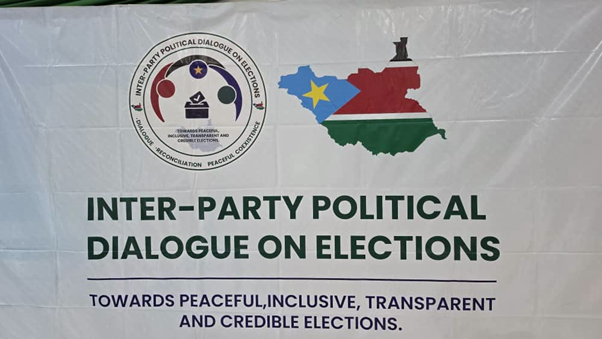
Speaking during the ongoing Inter-Party Dialogue in Juba, Lasuba Lodoru Wango, deputy chairperson of the SPLM-IO interim leadership, said registered political parties should be allowed to conduct meetings and other election-related activities without seeking security clearance.
“Registered political parties should not have to ask for security clearance to hold meetings related to their participation in the elections,” Lodoru said.
He also called for greater transparency in the vote-counting and results process, emphasizing the need for political party representatives to be present throughout the process.
“We also want to ensure that in this dialogue, we have a transparent counting process and a conclusion of results with all political members present.”
Lodoru stressed the importance of political parties agreeing on a mechanism for resolving disputes or disagreements that may arise during or after the elections.
“We must ensure that disagreements are resolved through formal legal processes, not through violence.”
He further called for the protection and safety of political party officials, members, and citizens throughout the electoral process.
“We need freedom for citizens to participate in any political activity without violence. They must be allowed to attend rallies if they wish, as it is important for them to form their own judgments and decide whom they want to support.”
Onyoti Adigo Nyikwec, chairman of the Democratic Change Party (DC), described inter-party dialogue as an essential tool for strengthening peace, democracy, national unity, and effective governance in the country.
“It creates an opportunity for parties to identify areas of disagreement, understand one another’s concerns, and take the risk of finding political solutions without resorting to confrontation,” Onyoti said.
He added that the dialogue provides a peaceful and structured platform for discussing and addressing political differences.
“Our system can discuss them and reach an agreement so that we can have credible elections. In the development of democracy, political disagreement should be addressed through communication, negotiation, or institutional instructions rather than confrontations.”
Joseph Wol Modest, Secretary-General of the Communist Party of South Sudan, called for the elimination of what he described as unnecessary and politically motivated expenses during elections.
“It rejects arrangements that absorb bits of politically established moral values. A democratic transition provides political diversity, organizational independence, equal political space, and the right of every party to maintain its identity and program,” Wol said.
Bishop Elias Taban Parangi, chief mediator of the Inter-Party Dialogue, affirmed that the mediation team would support political parties in finding their own solutions rather than imposing decisions on them.
“We are mediators, not facilitators. First of all, we are neutral. We remain impartial and do not take sides in the argument,” he explained.
“We help both sides to listen to each other without fighting. We assist people in finding their own solutions instead of forcing a decision on them,” Taban concluded.
Join the conversation
Keep contributions respectful, relevant and suitable for a public newsroom.