
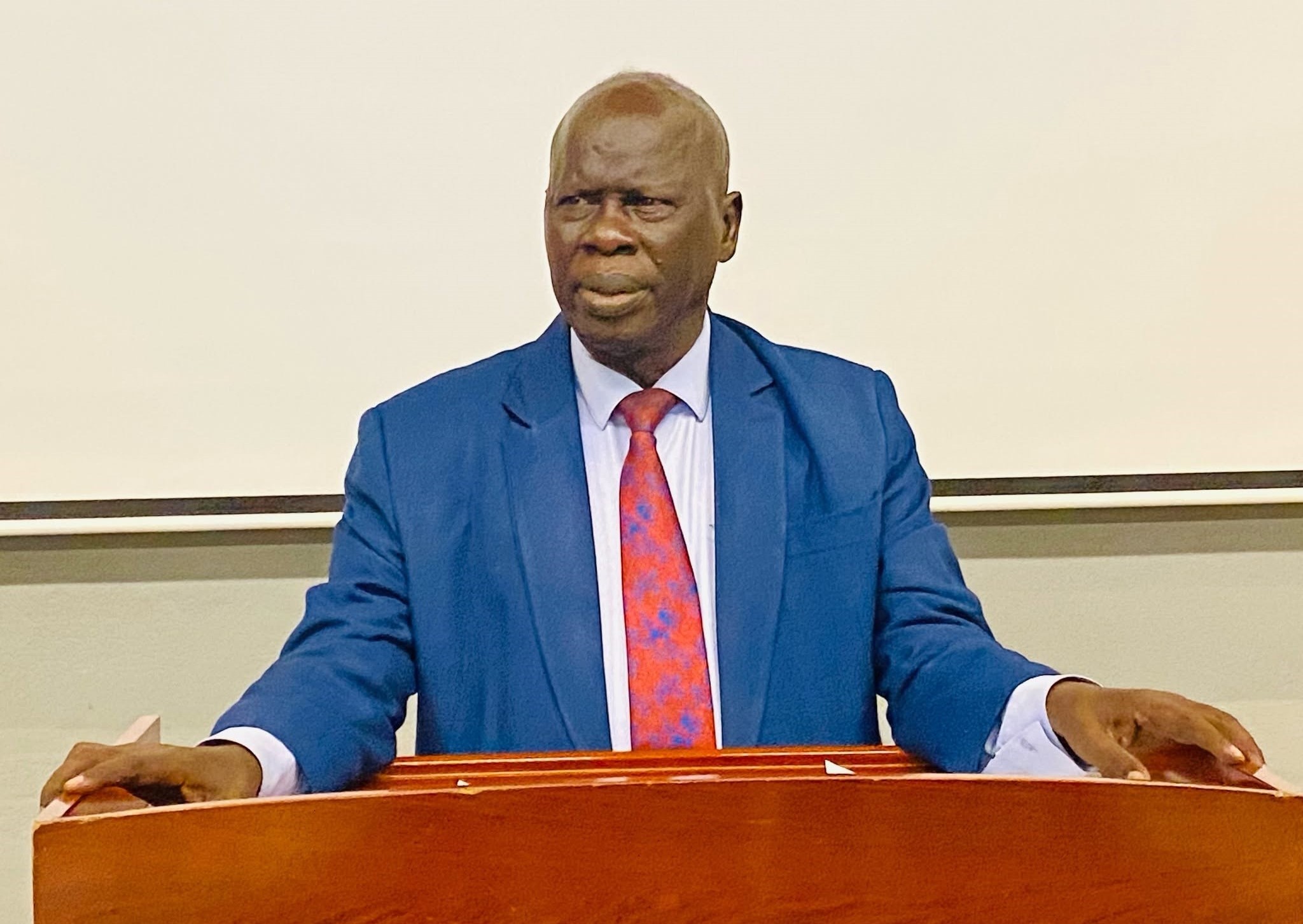
By Jenifer James
Hastin Yokwe Anisio, an aspiring candidate for the governorship of Central Equatoria State, has committed to addressing insecurity, unemployment, and declining public services.
He promises to prioritize peace, job creation, healthcare, and skills development if elected to lead the state. Anisio attributes the region’s stalled development and poor service delivery to inadequate leadership, political instability, and ongoing economic challenges.
In a press conference on Tuesday, Anisio explained that insecurity and instability have severely impacted South Sudan’s economy, which relies heavily on oil, hindering the government’s ability to provide essential services.
His vision for leadership centers on promoting peace, unity, and prosperity while enhancing the civil service’s capacity for improved service delivery.
“As your aspiring governor, I have a direction to take you to. My vision for you is peace, unity, and prosperity. To achieve this, I must develop the capacity of our civil service so they can effectively serve our people,” Anisio stated.
He pointed out that the challenges facing Central Equatoria are partly due to poor leadership, emphasizing the need for a new governance approach to tackle declining services and limited development.
Anisio highlighted that the upcoming elections present an opportunity for residents to elect leaders who can foster unity and address their needs.
“This election matters because you need to choose someone who will stand with you, who will not use our diversity to divide us but will cherish it as a foundation for the unity of this state and, by extension, the unity of the country,” he remarked.
The candidate also vowed to strengthen public institutions, noting that government employees require adequate training and support to deliver services effectively.
Regarding healthcare, Anisio proposed implementing minimum standards for health services across the state, including public hospitals and primary healthcare units.
He believes these standards will enhance the availability and quality of healthcare for communities in Central Equatoria.
Anisio also pledged to establish one or two vocational training centers in each county to equip young people with practical skills, increasing their chances of employment or enabling them to start their own businesses.
“I want to ensure that every county has one or two professional training centers so that our youth can acquire skills for self-employment and contribute to nation-building,” he stated.
He underscored the importance of vocational education for economic development, arguing that expanding access to professional and technical training would help reduce youth unemployment and enhance self-reliance.
In addition to vocational training, Anisio proposed creating more technical secondary schools in counties outside Juba to provide young people with specialized education closer to their communities.
He also called for the establishment of English-language training centers to assist students who received their education in Arabic and struggle with English communication.
Anisio pointed out that the language barrier has placed many students at a disadvantage in academic and professional settings, especially when competing with graduates from English-speaking backgrounds.
“We have declared that the Republic of South Sudan must adopt English as the official language. Yet, many individuals have studied only in Arabic and find it challenging to understand English,” he said.
Join the conversation
Keep contributions respectful, relevant and suitable for a public newsroom.