
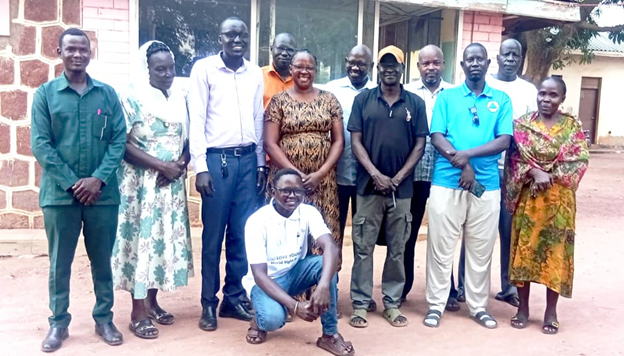
By Anak Dut Malual
Unreliable electricity supply disrupted surgical activities during a 10-day eye surgery campaign at Rumbek State Hospital in Lakes State, prompting visiting medical personnel to call for the installation of a standby generator to prevent interruptions during future medical operations.
John Mayik, an ophthalmologist and member of the visiting medical team from Juba, said frequent power interruptions, particularly during the afternoon, affected some medical activities, including the sterilisation of surgical equipment.
“Sometimes in the afternoon, we had some power issues because I think they are relying on solar,” Mayik said during the campaign’s closing ceremony.
He recommended providing a standby generator for future medical campaigns to ensure a reliable power supply, prevent delays in sterilising equipment and maintain uninterrupted surgical services.
Despite the electricity challenges, the 10-day campaign screened 1,424 patients and recorded 522 surgical procedures, exceeding its initial target, according to the team leader.
Dr. Hellen Atti Vuni, a cataract surgeon at Juba Teaching Hospital under the National Ministry of Health and leader of the visiting medical team, also identified inadequate surgical equipment as another major challenge encountered during the campaign.
She explained that the medical team initially relied on a single operating microscope during the first two to three days of the campaign before a second microscope became available.
The team also recommended providing adequate examination equipment, torches and other essential medical supplies to improve service delivery during future campaigns.
Dr. Hellen said the most common conditions identified among patients included age-related eye diseases, traumatic injuries and secondary infections. Other conditions diagnosed included glaucoma, allergies, refractive errors and corneal diseases.
However, she said some patients with irreversible eye conditions could not undergo surgery because their sight could not be restored through an operation.
“Some of them were crying in the OPD when we explained that their eyes could not be operated on,” she said.
Despite the conclusion of the campaign, Dr. Hellen confirmed that the eye clinic at Rumbek State Hospital would remain operational, with medical personnel and medicines available to support patients.
She said patients who underwent surgery were advised to return after seven days for follow-up examinations and further medical guidance. They were also provided with medication expected to last for one month.
Those who were screened but did not undergo surgery would continue to be assessed and registered for possible future treatment.
“If the number is huge, the staff, the National Ministry and the partners can sit together and organise for another time,” she said.
Meanwhile, Dr. Teran Madit, Director General at the Ministry of Health, commended the medical team for performing more than 500 surgical procedures within 10 days despite logistical and technical challenges.
He said the large number of patients seeking treatment reflected the growing demand for eye care services in Lakes State, where access to specialised medical services remains limited.
“Some of them had cataracts for four, five or even ten years without receiving this service,” Teran said, explaining that the cost of travelling elsewhere for treatment had prevented many patients from accessing surgery.
He called for more frequent eye surgery campaigns, preferably three times a year, to address the growing number of people requiring treatment.
Teran also advocated for upgrading the eye care unit at Rumbek State Hospital to a secondary-level facility to strengthen its capacity to manage more complicated eye conditions.
“With the pattern we are seeing, we need to upgrade the unit and the clinic to be a secondary-level facility,” he said.
He further called for the expansion of specialised healthcare services to county hospitals to reduce the burden on patients who travel long distances to Rumbek for treatment.
“At the Ministry of Health, we are always aiming and seeking to bring the services closer to the people as much as we can,” he said.
Meanwhile, Elizabeth Aluel Dut, a patient who returned for surgery on her second eye after successfully undergoing an operation on her first eye, expressed gratitude to the Lakes State Ministry of Health for facilitating the campaign.
She said her second eye was recovering and expressed hope that the operation would be as successful as the first. Aluel added that she intended to share her recovery experience with the community once she had fully recovered.
The medical team also thanked the state authorities, hospital administration and partners for providing accommodation, meals and logistical support throughout the 10-day campaign.
Join the conversation
Keep contributions respectful, relevant and suitable for a public newsroom.