
By Jenifer James
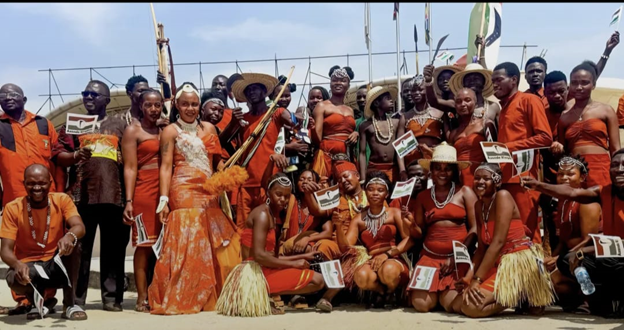
The Azande Cultural Festival will commence in Juba on Friday, November 27, uniting individuals from various ethnic communities to celebrate cultural diversity, foster peaceful coexistence, and preserve the heritage of the Azande people.
The festival will feature traditional dances, cultural attire, food, customs, and historical presentations, providing an opportunity for younger generations and other South Sudanese to learn about Azande identity, traditions, and values.
Ahead of the celebration, Pia Philip Michael, chairperson of the Organizing Committee, stated that the event is a chance to preserve the community’s identity and pass its traditions and values to future generations.
“The Azande Cultural Festival, organized by the Azande community in Juba, celebrates our traditions, customs, values, and heritage. It is an opportunity to showcase our culture to our children, the people of South Sudan, and those who have heard about the Azande but have not interacted with us,” Michael said.
He noted that the festival would be honored by His Majesty King Atoroba Peni Rikito Budwe, regarded as the king of the Azande people worldwide.
Michael emphasized that cultural preservation requires more than just teaching children at home.
“Tradition is a way of life passed down through generations. Each generation is defined by its culture and customs,” he explained.
He identified key values of the Azande community, including respect for elders, peace, social cohesion, care for children and women, and food production for families.
Michael also highlighted the community’s historical contributions to development, particularly in Western Equatoria State, mentioning the establishment of industries in Nzara, including cotton production and agricultural processing.
He stated that the festival aims to address stereotypes and misconceptions about the Azande community, especially the erroneous belief that its members originate from neighboring countries like Uganda and Kenya.
“Some young people have complained about being called ‘Wewe,’ as if they came from Uganda or Kenya, because we have not informed others about who we are,” Michael said.
The celebration will provide the 64 ethnic communities of South Sudan an opportunity to understand and appreciate one another.
“The cultural festival is also for the 64 tribes of South Sudan to recognize that the Azande people belong to South Sudan. They are not ‘Wewe,'” he added.
Michael explained that the decision to hold the festival in Juba was aimed at making it accessible to Azande families in the capital, especially children who may find it difficult to travel to Yambio for the annual cultural celebrations on February 9.
The Juba event specifically targets community members and younger generations with limited opportunities to participate in celebrations in Western Equatoria State.
Meanwhile, Ms. Modi Mbaraza, a representative of the Azande community organization in Juba, highlighted the vital role of women in preserving cultural values, particularly respect, family responsibility, and child-rearing.
She noted that women traditionally played a crucial role in maintaining households and caring for children, especially when men were away at war.
“In Zande culture, women are highly respected. When the king enters, people kneel to welcome him. As women, we kneel and greet using both hands to show respect,” she explained.
Mbaraza recounted an incident where her daughter was mistakenly identified as a foreigner due to her appearance and inability to speak Arabic, despite being South Sudanese.
This experience underscored the need for greater cultural awareness and understanding among South Sudanese communities.
She concluded that the celebration is expected to enhance interactions among young people, challenge tribal stereotypes, and promote unity, peaceful coexistence, and a shared South Sudanese national identity.



Join the conversation
Keep contributions respectful, relevant and suitable for a public newsroom.