
By Simon Deng
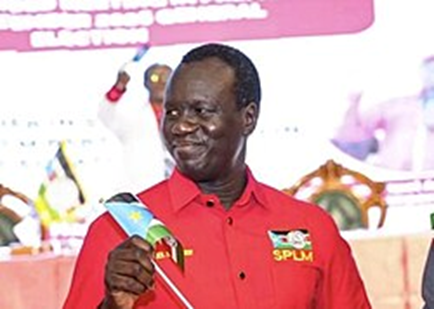
The Secretary-General of the Sudan People’s Liberation Movement (SPLM), Akol Paul Kordit, says the party will prioritize education when selecting candidates for the national and state parliaments, arguing that academic qualifications are important for lawmakers tasked with shaping policies and guiding South Sudan’s development as a country emerging from conflict.
“The SPLM is going to prioritize the issue of education because the National Assembly is a house where people discuss policies for national development. It is a house for a state emerging from conflict,” Kordit said.
He revealed that, out of the 848 nominees registered by the party, 343 hold bachelor’s degrees, 261 have master’s degrees, 121 hold diplomas, 66 have secondary school certificates, 37 hold PhDs, and nine have postgraduate diplomas.
Kordit added that eight nominees had not indicated their academic qualifications, while three had a primary school education. He said the figures offered an indication of the academic backgrounds of candidates the SPLM intends to put forward for various electoral positions.
Last week, the SPLM launched its membership registration and candidate nomination process to select party members for various electoral positions.
The party registered 848 nominees across different positions, including 144 candidates for gubernatorial and chief administrator positions, 417 for geographical constituencies, 114 for the party list and 161 for the women’s list.
Kordit said the party secretariat had registered 639 male nominees and 209 female nominees. He added that the party had collected 2.544 billion South Sudanese pounds in nomination fees from members who completed the nomination forms.
“This money will be used to facilitate the process of primaries and congresses. This is not the only money. We have been engaged in the process of resource mobilization. This will be a boost to the existing budget of the SPLM,” he said.
Kordit said the party needed members of parliament capable of discussing and formulating policies to rebuild the economy, support a successful political transition and drive social transformation.
“Education is fundamental in our eligibility criteria for the 204 members of parliament that are going to be elected, plus 66. The task of nation-building will be a primary responsibility of the new parliament,” he said.
Join the conversation
Keep contributions respectful, relevant and suitable for a public newsroom.