
By Staff Writer
Ongoing flood protection investments in Bor Town are enhancing community resilience by safeguarding homes, protecting critical infrastructure, and improving farming conditions in an area repeatedly affected by seasonal flooding.
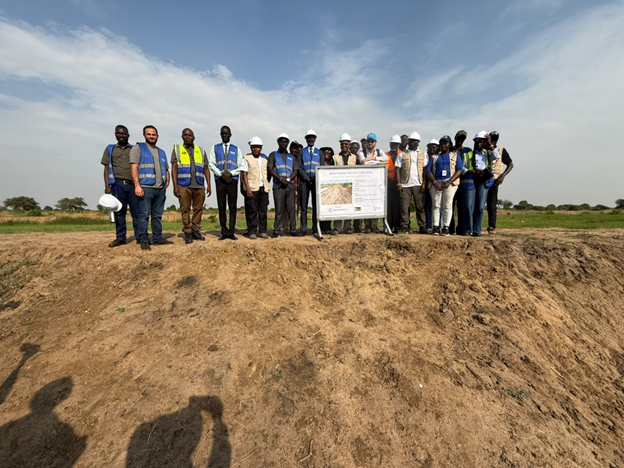
Progress on flood mitigation efforts was assessed during a field mission by representatives from the Ministry of Water Resources and Irrigation (MWRI), the World Bank, the United Nations Office for Project Services (UNOPS), and the International Organization for Migration (IOM).
These flood protection investments are crucial for strengthening community safety, preserving essential infrastructure, and creating favorable farming conditions in Bor Town, where seasonal flooding has impacted homes, livelihoods, and access to essential services.
The mission highlighted these developments, as representatives visited Bor Town to evaluate the progress of ongoing flood mitigation works.
This mission was part of the Government of South Sudan’s initiative to enhance flood-risk management under the Regional Climate Resilience Programme (RCRP), financed by the World Bank and implemented by the MWRI through its Project Implementation Unit (PIU) in partnership with IOM.
During the visit, the delegation inspected rehabilitated flood-protection dykes, drainage channels, and a pumping station. They reviewed the progress of infrastructure works and discussed measures to improve flood management and ensure the long-term effectiveness of the investments.
Under the program’s Immediate Flood Mitigation Measures, over 15 kilometers of existing flood-protection dykes and 6 kilometers of drainage channels have been rehabilitated. These interventions are strengthening flood defenses, improving water flow, and reducing the risk of flooding in vulnerable areas of Bor Town.
For communities that have faced repeated flooding, robust flood-protection infrastructure is particularly vital. Seasonal floods can damage homes, disrupt access to schools and health facilities, and limit opportunities for farming and other economic activities. The rehabilitation efforts aim to mitigate these risks while promoting safer living conditions and more reliable access to essential services.
One notable observation during the mission was the cultivated farmland alongside the rehabilitated dykes. Community members were seen tending to vegetable gardens, emphasizing the importance of protecting agricultural land and fostering conditions that enable families to sustain their livelihoods.
These agricultural activities illustrate the close connection between flood protection and livelihood security. By reducing farmland exposure to seasonal flooding, improved infrastructure can help communities utilize land productively and minimize disruptions to agricultural activities.
The delegation also assessed drainage infrastructure and pumping equipment, which are essential for managing excess water.
Improved drainage channels are designed to facilitate water flow and reduce accumulation, particularly in areas prone to seasonal flooding. Together with the rehabilitated dykes, these interventions are part of a comprehensive strategy to strengthen Bor Town’s flood management system.
In addition to immediate measures, the government is pursuing longer-term strategies to address the town’s vulnerability to flooding. These efforts build on a hydrological study conducted in 2023, which is being updated to reflect current conditions in Bor Town.
The updated flood modeling and engineering assessments will guide future investments in flood-protection infrastructure, drainage systems, culverts, and soil erosion control.
This technical work aims to identify priority interventions and ensure that future infrastructure investments address local flood risks and community needs.
The field mission also provided an opportunity for government representatives, the World Bank, and development partners to review implementation priorities and discuss the operation and maintenance of flood-protection infrastructure. Effective maintenance will be crucial for preserving the functionality of rehabilitated structures and sustaining their benefits for surrounding communities.
The Regional Climate Resilience Programme is part of the Government of South Sudan’s efforts to enhance climate resilience through improved infrastructure, technical planning, and coordinated flood-risk management.
Financed by the World Bank and implemented by the Ministry of Water Resources and Irrigation through its Project Implementation Unit, in partnership with IOM, the program aims to reduce flood risks, safeguard essential infrastructure, and strengthen community resilience.
For the people of Bor Town, these investments represent a significant step towards mitigating the disruptions caused by seasonal flooding, protecting livelihoods, and creating more secure conditions for families and future generations.
Join the conversation
Keep contributions respectful, relevant and suitable for a public newsroom.